CategoriesUncategorized

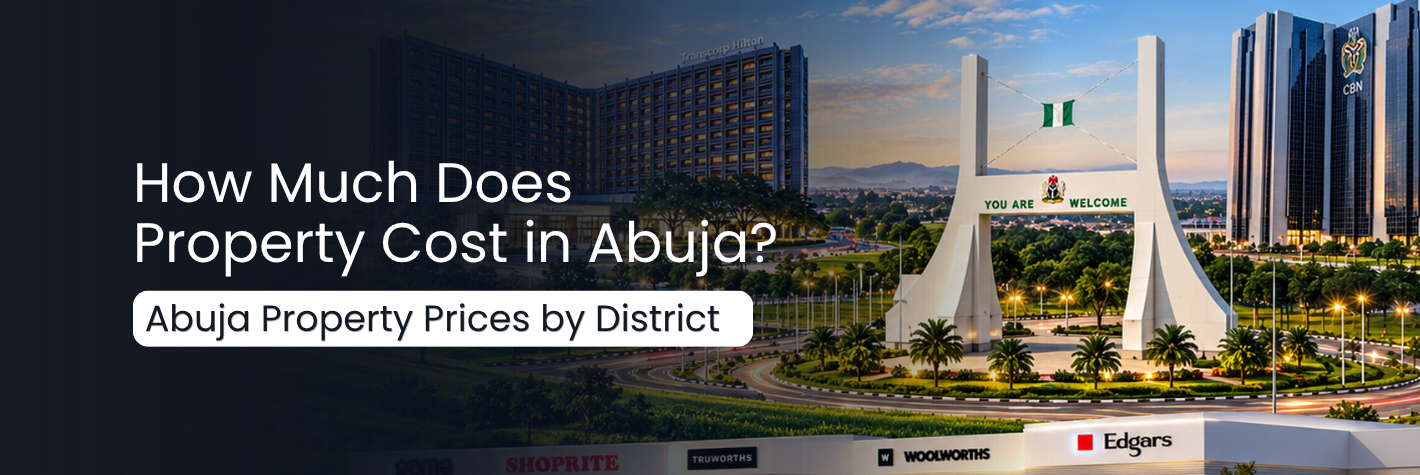
Abuja Real Estate Red Flags: Run or Investigate?

Abuja real estate can be a great place to build wealth, but buying the wrong property can turn an exciting investment into an expensive problem.

Demand for land and property remains strong across Abuja, but every property transaction comes with questions that should be answered before money changes hands.

Is the title genuine?
Who actually owns the property?
Are there outstanding government obligations?
Does the land use match what the property is being used for?
Can the seller legally transfer the interest to you?

These questions matter because real estate red flags in Abuja are not always obvious.

You could buy land you cannot legally develop. You could discover an outstanding government obligation after payment. You could purchase property with questionable documentation. In more serious cases, you could face a dispute over ownership or even lose the property.

But here is the important distinction:

Not every red flag means you should walk away.

Some are genuine deal-breakers.

Others are warning signs that require investigation, verification and proper documentation before you proceed.

So, when buying property in Abuja, the question should not simply be:

“Is there a red flag?”

The better question is:

“Is this a reason to run, or a reason to investigate?”

Why Property Buyers in Abuja Need to Be More Careful

Buying property in Abuja involves more than finding a good location and agreeing on a price.

The documentation behind the property matters just as much as the property itself.

Recent actions by the Federal Capital Territory Administration (FCTA) show why property documentation in Abuja and statutory obligations should not be treated casually.

In March 2025, the FCTA revoked 4,794 land titles over unpaid ground rent. The administration said 8,375 property owners owed approximately ₦6.97 billion in ground rent, with the affected titles covering properties that had been in default for at least 10 years.

The affected areas included Central Area, Garki, Wuse, Asokoro, Maitama and Guzape.

Later in November 2025, the FCTA announced enforcement action involving another 1,095 property titles over outstanding ground rent, C-of-O bills, penalty or violation fees and land-use conversion fees.

The affected properties included properties in Asokoro, Maitama, Garki and Wuse.

The lesson for anyone considering buying land or property in Abuja is straightforward:

Property paperwork is not something you check once and forget.

AGIS lists ground rent, C-of-O bills and title-related payments among matters connected to land administration in the FCT. Its land administration framework also recognises circumstances in which a Right of Occupancy can be affected by breaches such as non-payment of ground rent, unauthorised change of land use or failure to meet development requirements.

That means documentation, title status and payment history can all form part of the investment risk.


Abuja Real Estate Red Flags That Mean RUN

Some property red flags are too serious to negotiate around.

If the fundamental ownership story cannot be verified, the safest decision is to stop.

1. The Seller Cannot Show a Traceable Root of Title

One of the biggest real estate red flags in Abuja is a seller who cannot clearly demonstrate how the property came to them.

You should be able to understand the chain behind the property:

  • Who was the original allottee?

  • How did the current seller acquire the interest?

  • What documents support each relevant transfer?

  • Is the property captured in the relevant government records?

The FCT Department of Land Administration is responsible for the registration and management of land titles and documents affecting land in the FCT, while AGIS provides land administration, survey, title and legal-search services.

If the seller cannot produce a credible documentary trail, stop before paying.

A good location does not compensate for an unclear ownership history.


2. “The Chief Approved It” Is the Only Proof

A local connection or verbal assurance is not a substitute for proper land documentation.

This becomes particularly important when dealing with land described as family land, village land or land allocated through an informal arrangement.

If the seller’s entire argument is:

“The chief knows us.”

Or:

“The family has been here for years.”

That is not enough.

The real question is whether the seller’s interest can be legally established and independently verified through the appropriate land administration and documentation process.

For Area Council land, AGIS has an Area Council Regularisation service designed to formalise eligible Area Council allocations within the FCT land administration system.

If the documentation cannot be properly verified, run.


3. The Documents Fail Official Verification

A document can look genuine and still have serious problems.

In February 2026, the FCTA announced the cancellation of 485 Area Council land allocations after verification checks found the relevant applications to be fake or not genuine. The affected documentation covered areas in Bwari, AMAC and Kuje.

That should serve as a warning to every land buyer in Abuja:

A document is not genuine simply because it has a stamp, signature or official-looking letterhead.

Verification matters.

If the documentation fails an official verification process, do not try to negotiate your way around the problem.

Walk away.


4. The Property Is Government-Acquired or Has a Serious Land-Use Problem

Before buying land in Abuja, you need to understand what the land is designated for and whether the seller has a valid interest in it.

Property affected by government acquisition, infrastructure reservations or other restrictions can create serious problems for a buyer.

Similarly, a property being marketed for a purpose that conflicts with its approved use should immediately raise questions.

For example, if land was allocated for residential use but is being marketed or operated for another purpose, you need to understand whether the relevant change of use has been properly approved.

If a seller tells you:

“Don’t worry about the land use; everyone is doing it.”

Worry.

If the fundamental legal status of the land cannot be established, run.


5. You Are Being Asked to Pay Into a Personal Account

Being asked to pay into a personal account is not automatically proof of fraud.

But it is a major property transaction warning sign, particularly when you are purchasing from a registered company.

If payment is being requested into an individual’s account, ask why.

Before making payment, request:

  • An official invoice

  • Clear payment instructions

  • The relevant agreement

  • Company details

  • An official receipt

  • An explanation for any third-party payment arrangement

And never allow urgency to replace due diligence.

If someone tells you:

“Pay today or the land will be gone.”

Your response should be:

“Let me verify it first.”

A genuine transaction should be able to survive reasonable due diligence.


Abuja Real Estate Red Flags That Mean INVESTIGATE

Not every warning sign means the property is bad.

Some issues simply mean you need more information before making a decision.

The difference is whether the issue can be verified, documented and legally resolved.

1. There Are Outstanding Ground Rent or C-of-O Payments

Outstanding ground rent or C-of-O payments are serious, but they are not necessarily an automatic reason to abandon a transaction.

The first questions should be:

How much is outstanding?

Who is responsible for settling it?

AGIS documentation shows that payment of ground rent and, where applicable, C-of-O bills forms part of the relevant land administration process.

If you are buying an existing property with outstanding obligations, your lawyer should determine how those obligations will be handled.

Where appropriate, make settlement of outstanding liabilities a clearly documented condition of the transaction.

Do not simply accept:

“You will sort it out after buying.”

Get it documented.


2. The Land Use Does Not Match the Current Use

Imagine a property allocated for residential use that is currently being operated as a commercial property.

That does not automatically mean the property is worthless.

But it does mean you need to investigate.

Ask:

  • Has the change of use been approved?

  • Were the required fees paid?

  • Is the current use recognised by the relevant authorities?

  • What documentation supports the change?

If the situation can be properly regularised, the issue may be manageable.

If the seller cannot explain the situation or provide supporting documentation, the risk becomes much greater.


3. The Property Price Is Far Below the Market

A cheap property is not automatically a scam.

But an unusually low price should trigger questions.

Why is the seller selling below comparable properties?

Could there be an urgent need for liquidity?

Is there an outstanding government obligation?

Is the property difficult to transfer?

Is there a dispute?

Is the title incomplete?

Is the location different from what was advertised?

A discount can be legitimate.

But before treating a low price as an opportunity, understand why the property is cheap.

Remember:

Cheap is not the problem. Unexplained cheap is.


4. There Are Company or CAC Name Discrepancies

This becomes particularly important when buying property from a company or dealing with land that has passed through corporate ownership.

Check:

  • Registered company name

  • CAC registration

  • Directors

  • Company documents

  • Authority of the person signing

  • Property ownership documents

  • Allocation history

If the name on the property document does not match the company selling the property, do not automatically assume it is a simple administrative error.

Investigate the chain.

You need to understand why the names differ and whether the person or company selling the property has the legal authority to do so.


5. It Is an Estate With No Clear Documentation Structure

Estate developments can offer convenience, infrastructure and a more organised purchasing process.

But never assume that every property marketed as an Abuja real estate estate development has the same level of documentation.

Before buying, ask:

  • Who owns the master title?

  • What is the approved layout?

  • How is each plot identified?

  • What documentation will the buyer receive?

  • What infrastructure obligations exist?

  • What is the developer’s corporate identity?

  • What process exists for individual documentation or title?

AGIS provides Mass Housing Vetting and Sectional Titling services for eligible developments, demonstrating that estate and mass-housing documentation can involve specific verification and titling processes.

The more structured the documentation, the easier it is for a buyer to understand exactly what they are purchasing.


Abuja Property Red-Flag Decision Guide

Warning SignWhat To Do
No traceable root of titleRUN
Seller cannot prove identity or authorityRUN
Documents fail official verificationRUN
Serious government acquisition issueRUN
Seller relies only on informal approvalRUN
Payment requested without proper documentationSTOP & INVESTIGATE
Outstanding ground rentINVESTIGATE
Outstanding C-of-O billINVESTIGATE
Land-use mismatchINVESTIGATE
Unusually low priceINVESTIGATE
Company/CAC discrepancyINVESTIGATE
Incomplete estate documentationINVESTIGATE

The important distinction is this:

A problem that can be verified and legally resolved is different from a problem that destroys the foundation of the transaction.

That distinction can save a buyer from either walking away from a legitimate opportunity—or walking into a serious property dispute.


Your Pre-Purchase Abuja Property Checklist

Before transferring money for land or property in Abuja, work through these steps.

1. Conduct an Official Property Search

Use the appropriate AGIS and FCT land administration channels to verify the property’s records, title position and relevant information.

AGIS provides legal-search services and land records within its land administration structure.

Do not rely solely on documents supplied by the seller.

Verify independently.


2. Verify the Seller

For an individual, verify their identity and authority to sell.

For a company, check its corporate information and confirm that the person representing the company has the authority to transact.

Do not assume that the person showing you the property is automatically the person legally entitled to sell it.


3. Engage a Property Lawyer

A property lawyer can help review:

  • Title documents

  • Deeds

  • Allocation documents

  • Agreements

  • Search results

  • Seller authority

  • Transaction terms

For a significant property purchase, professional legal due diligence can be valuable because the cost of identifying a problem before payment is usually far lower than dealing with a defective transaction afterward.


4. Verify the Survey and Physical Location

The physical property should correspond with its documentation.

Check:

  • Plot number

  • District

  • Size

  • Coordinates

  • Boundaries

  • Survey information

AGIS provides certified survey information, site plans, plot coordinates and cadastral data for land identification and verification in the FCT.

Do not assume that the plot shown to you physically is necessarily the plot described in the documents.


5. Visit the Property

Do not buy land entirely from WhatsApp pictures.

Visit the site.

Look at:

  • Access roads

  • Surrounding development

  • Existing infrastructure

  • Neighbouring properties

  • Physical boundaries

Speak to people around the area where appropriate.

Most importantly, make sure the physical location corresponds with the property you are actually purchasing.


6. Check Ground Rent and Other Outstanding Obligations

Ask for evidence of relevant payments.

AGIS provides mechanisms for obtaining and paying FCT land-related bills, including ground rent and C-of-O bills.

Do not simply accept:

“Everything has been paid.”

Verify it.


7. Put Important Conditions in the Agreement

If an outstanding payment needs to be settled, or a document needs to be produced before completion, put it in writing.

Do not rely on a verbal promise.

If something matters to the transaction, it should be reflected in the appropriate documentation.


8. Pay Through Traceable Channels

Use documented payment channels and obtain official receipts.

Your payment should be capable of being traced back to the transaction and the party receiving the money.

If something goes wrong later, a clear payment trail can become important evidence.


9. Register and Perfect Your Interest

Buying the property is not necessarily the end of the process.

Depending on the transaction, title registration, consent and other perfection steps may still be required.

AGIS provides processes relating to title registration, deeds and other land transactions.

Do not leave your documentation unfinished indefinitely.


Three Questions Every Abuja Property Buyer Should Ask

Before you pay for property in Abuja, ask three fundamental questions.

1. Who owns this property?

Not:

Who is selling it?

Ask:

Who actually has the legal interest in it?


2. Can I independently verify that ownership?

Not through the seller.

Through the appropriate official records and professional due diligence.


3. What obligations or restrictions come with the property?

Consider:

  • Ground rent

  • C-of-O payments

  • Land use

  • Development requirements

  • Encumbrances

  • Outstanding fees

  • Disputes

These questions may seem simple, but they can help expose problems before they become expensive.


FAQ: Buying Property in Abuja

Is it safe to buy land in Abuja without a lawyer?

It is possible to complete a property transaction without professional legal advice, but doing so can expose a buyer to avoidable risks.

A property lawyer can help review the title, conduct or coordinate searches and identify contractual issues before you commit your money.

For a significant property purchase, professional legal due diligence is worth considering.

Does an allocation letter prove ownership?

Not necessarily.

An allocation document can be an important part of a property’s documentation, but its meaning and validity depend on the issuing authority, the underlying transaction and the property’s official records.

It should be independently verified.

Can I lose a property because of unpaid ground rent?

Yes.

FCTA has taken enforcement action against properties whose titles were revoked over unpaid ground rent and other statutory obligations.

This is why buyers should investigate the payment history and outstanding obligations attached to a property before completing a transaction.

Is a cheap plot of land automatically a bad investment?

No.

A below-market price can have legitimate reasons.

But it should trigger additional questions:

  • Why is it cheaper?

  • What is different about the property?

  • Is the title clear?

  • What infrastructure exists?

  • What obligations are outstanding?

Cheap is not the problem. Unexplained cheap is.

What should I verify before buying land in Abuja?

At a minimum, investigate the property’s title, ownership history, seller authority, survey information, land use, government records, outstanding obligations and relevant transaction documents.

Where necessary, engage a property lawyer to interpret the documentation and guide the transaction.


The Bottom Line: Know When to Run

Buying property in Abuja requires more than finding a good location and negotiating a good price.

You need to understand the documentation behind the property.

Run when the ownership story cannot be verified.

Run when official verification exposes a fundamental problem with the property.

Run when the seller cannot establish their authority to sell.

But investigate when the issue is potentially resolvable—such as an outstanding payment, land-use matter or documentation gap.

The key is not to panic at every red flag.

It is to know what the red flag means.

In Abuja real estate, the smartest buyer is not necessarily the person who finds the cheapest property.

It is the person who verifies what they are buying before they pay for it.


Buying Property With Confidence

At NeoHomes Limited, we believe real estate should be built on more than attractive locations and good marketing.

It should be built on clarity, proper documentation and informed decisions.

As our portfolio continues to expand across Abuja—including locations such as Kyami, Kuje, Karsana, Kabusa and Ketti-Kabusa—we understand that every property decision should begin with understanding both the opportunity and the documentation behind it.

Whether you are buying land for future development, purchasing an apartment or expanding your investment portfolio, do not be afraid to ask difficult questions.

Ask about the title.

Ask about the land use.

Ask about the infrastructure.

Ask about outstanding obligations.

Ask to see the documents.

And most importantly, verify before you pay.

Because in Abuja real estate, knowing when to walk away can be just as valuable as knowing when to invest.

NeoHomes Limited — Peace Beyond Shelter.
CategoriesUncategorized

How New Roads and Interchanges Are Opening Up Abuja’s Emerging Property Markets

In Abuja, distance is often measured in minutes, not kilometres.

A location can look far away on a map but feel much closer once a good road connects it to the city centre.

That is why roads matter so much to real estate.

When a new highway, interchange or access road reduces travel time, it can change how people perceive an area. Businesses can move closer. New housing can become viable. Residents can consider locations they previously ignored. And investors begin paying attention to land that once seemed too far from the city.

This is already happening across parts of Abuja.

Infrastructure investment is opening up previously underserved districts, while areas such as Kuje, Karsana, Idu, Lugbe and other emerging corridors are attracting increased development and investor interest. BusinessDay reporting has identified improved connectivity as an important factor behind rising property activity in these locations.

But there is an important distinction.

A road project does not automatically make every nearby plot a good investment.

The opportunity lies in understanding which roads are actually being delivered, what they connect, how they affect movement and whether genuine demand is following the infrastructure.


Why Roads Matter So Much to Abuja Real Estate

Imagine two properties.

Property A is 10 kilometres from the city centre but requires 60 minutes to reach during normal traffic.

Property B is 20 kilometres away but can be reached in 30 minutes because of a better road.

Which one feels closer?

For most people, the answer is obvious.

This is why accessibility can influence property values.

A major road can change:

  • Travel time

  • Access to employment

  • Access to schools and hospitals

  • Commercial activity

  • Residential demand

  • Development costs

  • Rental demand

  • Investor sentiment

Real estate professionals quoted by BusinessDay have described infrastructure as one of the strongest forces currently reshaping Abuja’s property market, with improved roads opening previously overlooked districts to development.

The important point is that infrastructure does not just make transportation easier.

It can change the economic geography of a city.


Abuja’s Infrastructure Push Is Changing the Map

The FCT has been undertaking a significant programme of road construction, rehabilitation and urban infrastructure.

Projects across different parts of the territory are connecting the city centre with satellite towns, emerging districts and previously underserved communities.

Some of the projects investors should understand include:

  • Airport–Kuje corridor improvements

  • Kuje–Gwagwalada road

  • Outer Southern Expressway (OSEX)

  • Inner Southern Expressway (ISEX)

  • N16 interchange around NICON Junction

  • Apo–Karshi Road

  • Bwari–Kubwa Road

  • Tungan Madaki–Zuba Road

  • Various access and district roads across emerging communities

Several of these projects are either completed, under construction or progressing toward stated completion targets.

For example, the Outer Southern Expressway main carriageways were inaugurated in June 2026, strengthening connectivity between parts of Abuja’s southern urban network.

The Tungan Madaki–Zuba road was also inaugurated in July 2026, with the Federal Government describing it as a corridor capable of supporting housing, education, healthcare and industrial development along the axis.

Meanwhile, the FCT Administration has continued to target completion of several ongoing projects toward the end of 2026 and into early 2027.

For property investors, this creates a bigger question:

Which emerging locations are being transformed from “far away” into genuinely accessible markets?


1. The Airport–Kuje Corridor

The Airport Road axis has already become one of Abuja’s most important development corridors.

Its importance comes partly from what it connects.

The airport is one of the capital’s major gateways, while the corridor also connects residential communities, commercial developments and emerging districts.

Further road improvements toward Kuje can strengthen the connection between the satellite town and the wider Abuja network.

Kuje therefore deserves attention—not because every property there will appreciate dramatically, but because improved connectivity can increase the number of people who consider the area practical for living, working and investing.

That distinction matters.


2. Kuje and the Kuje–Gwagwalada Corridor

Kuje is increasingly becoming part of the conversation around Abuja’s expanding property market.

One reason is infrastructure.

The Kuje–Gwagwalada corridor is intended to provide a more direct connection between the two Area Councils and reduce dependence on existing routes.

In September 2026, FCT Minister Nyesom Wike said funding would be provided to ensure the Kuje–Gwagwalada road is completed by December.

For investors, the road is important because of what it could connect.

Kuje is not simply a residential market.

It also has agricultural, commercial and population activity that can benefit from better movement between communities.

Industry stakeholders quoted by BusinessDay have linked the Kuje–Kwali corridor to rising land and housing values.

However, investors should distinguish current value from future potential.

If prices have already increased significantly, some of the expected infrastructure benefit may already be reflected in asking prices.


3. Gwagwalada and Kwali

Further along the corridor, Gwagwalada and Kwali offer another perspective on Abuja’s expansion.

These areas generally have lower property prices than the established districts of the city centre, but lower entry prices also come with different risks.

Liquidity may be lower.

Infrastructure may be less developed.

Demand may take longer to mature.

And an investor may need a longer holding period.

The Kuje–Gwagwalada connection, alongside projects such as the Kwaita–Yebu Road and other roads around Kwali, could gradually improve connectivity across the wider corridor.

But the right investment question is not:

“Is this area going to boom?”

It is:

“What infrastructure is actually being delivered, and what demand is likely to follow it?”


4. Kabusa–Ketti and the Southwest

The Kabusa–Ketti axis is another area investors should watch as Abuja’s southwest continues to develop.

Access roads connecting communities within the corridor can have an important effect on how easily residents move toward established parts of Abuja.

This is where investors need to understand the difference between proximity and accessibility.

A location can be geographically close to the city but still feel distant because of poor roads.

Once accessibility improves, the same location can become considerably more attractive.

For investors looking at Ketti-Kabusa, therefore, the conversation should not stop at land price.

Look at:

  • Road access

  • Existing estates

  • Population growth

  • Nearby commercial activity

  • Infrastructure

  • Documentation

  • Development pipeline

The land itself is only part of the investment story.


5. Lugbe: When an Emerging Corridor Becomes Established

Lugbe provides an important lesson for investors.

It was once viewed primarily as an outer residential district.

Today, it is an established part of Abuja’s broader housing market, supported by its location along the Airport Road corridor and significant residential development.

That means the investment proposition is different.

Investors are no longer simply betting on whether Lugbe will become accessible.

It already is.

The question becomes whether a particular property is correctly priced relative to its location, infrastructure, rental demand and surrounding development.

This is an important lesson for anyone looking at emerging markets:

The biggest gains from infrastructure may occur before an area becomes fully established.

But entering too late can also mean paying a premium for growth that has already happened.


6. Bwari and Kubwa: Watch the Delivery, Not the Announcement

The Bwari–Kubwa connection is another project worth watching.

The road has the potential to improve movement between the two areas and strengthen access to the wider Abuja network.

But there is a lesson here for investors:

An announced project is not the same thing as a completed project.

Construction timelines can change.

Weather can affect work.

Funding can affect progress.

Contractor performance can affect delivery.

That means investors should separate three categories:

Completed

The infrastructure exists and can be used.

Under Construction

There is visible, funded work taking place.

Announced

The project has been discussed or approved, but the physical transformation has not yet happened.

These three stages should never be treated as equivalent.


7. Tungan Madaki–Zuba: A New Corridor to Watch

The 7-kilometre Tungan Madaki–Zuba road was inaugurated in July 2026.

The Federal Government described the project as a way to improve connections between communities and the Abuja–Kaduna axis while supporting housing, education, healthcare and industrial activity.

This is exactly the type of infrastructure investors should study.

Not simply because a road has been built, but because of what economic activities the road could support.

When connectivity improves between communities and major highways, the potential market becomes larger.

But once again, investors should avoid jumping directly from:

“New road”

to

“property prices will double.”

There are several steps in between.


How Roads Can Affect Property Values

Infrastructure can influence property markets through several channels.

1. Reduced Travel Time

This is the most obvious.

A shorter commute can make a location more attractive to residents.

2. Improved Accessibility

Better roads allow businesses, delivery services, employees and customers to reach an area more easily.

3. New Development

Developers are more likely to consider locations where infrastructure supports construction and future occupancy.

Recent reporting on Idu, for example, has linked ongoing infrastructure improvements to increased residential development activity in the area.

4. Increased Commercial Activity

Roads can create opportunities for shops, offices, schools, hospitality businesses and other services.

5. Changing Perception

Sometimes the biggest change is psychological.

A location that once felt “too far” can become acceptable once the journey becomes easier.

And perception matters in real estate.


But Do New Roads Always Increase Property Values?

No.

Infrastructure can support property appreciation, but it does not guarantee it.

The outcome depends on several factors:

  • Quality of the infrastructure

  • Completion

  • Accessibility

  • Security

  • Electricity

  • Water

  • Population growth

  • Employment opportunities

  • Commercial activity

  • Existing property supply

  • Affordability

  • Title quality

A road through an area with weak demand does not automatically create a property boom.

Likewise, a road can increase land prices while rents remain relatively weak if the population and economic activity have not caught up.

That is why investors should look beyond land appreciation.

Study the actual property market.


The Hidden Cost of Infrastructure-Led Growth

Infrastructure creates opportunities, but it can also create affordability pressure.

BusinessDay has reported that infrastructure-led development in Abuja is contributing to higher land values and rents in several districts, with some households and small businesses being pushed farther from areas where they previously operated.

This creates an interesting dynamic for investors.

Rising property values can benefit existing owners.

But rising rents can also reduce affordability.

And if prices rise too quickly because of speculation rather than genuine demand, investors may find themselves buying at inflated levels.

So when you hear:

“This road has increased land prices by 30%.”

do not immediately celebrate.

Ask:

30% from what price?

Over what period?

Based on actual transactions or asking prices?

Is the increase supported by rental demand?

How much of the expected future growth is already priced in?

Those questions matter.


Be Careful With Property Appreciation Statistics

Property marketing is full of numbers.

You may see claims such as:

  • “This area appreciated 30% last year.”

  • “Prices will double after the road is completed.”

  • “Buy now before prices increase.”

  • “This is Abuja’s next hotspot.”

Some of these claims may be based on genuine market observations.

Others may be marketing estimates.

Unless a figure comes from a reliable market dataset or verified transaction evidence, it should not be treated as a guaranteed forecast.

This is particularly important when building a financial model.

Do not base your investment decision on the appreciation percentage printed on a flyer.

Look at actual comparable properties.


What About Kuje, Lugbe, Gwagwalada and Other Emerging Markets?

There is no single “best” emerging location in Abuja.

Different areas offer different combinations of price, infrastructure, demand and risk.

Kuje

Potentially attractive to investors looking for lower entry points and exposure to expanding infrastructure, but requires careful title and market verification.

Lugbe

More established, with stronger existing residential demand, but this maturity can mean higher entry prices.

Gwagwalada

A major satellite-town market with significant population and economic activity, but investors need to assess specific locations rather than the entire Area Council as one market.

Kwali

Lower entry prices may be available, but investors should consider liquidity, infrastructure and their ability to hold for longer.

Bwari/Kubwa

Infrastructure improvements could strengthen connectivity, but project completion and actual development should be monitored closely.

Ketti-Kabusa/Kabusa

An emerging southwest corridor where investors should pay close attention to access roads, estate development, documentation and surrounding infrastructure.

The lesson is simple:

Do not buy a location. Buy a specific property in a specific location after understanding the evidence.


How to Invest Along Abuja’s New Growth Corridors

If you are considering property because of a new road or interchange, use this checklist.

1. Check the Road’s Status

Is it:

Completed?

Under construction?

Only announced?

Do not price all three situations the same way.


2. Verify the Property Documentation

Make sure the property has proper documentation and that the seller’s interest can be verified.

For land in the FCT, appropriate searches and verification should be conducted through the relevant land administration channels.


3. Understand the Land Use

A residential plot is not automatically a commercial property.

Check the approved use before assuming what you can build or operate.


4. Compare Prices Per Square Metre

Do not compare only the total price.

Compare similar plot sizes across several estates and locations along the same corridor.

This can help you determine whether you are paying a reasonable price or simply paying for a marketing story.


5. Study Rental Demand

If your investment strategy depends on rental income, investigate:

  • Existing rents

  • Vacancy

  • Tenant profile

  • Competing properties

  • Service charges

  • Maintenance costs

A property can appreciate without being a strong rental investment, and vice versa.


6. Look at What Is Being Built Around You

A road is only one piece of the story.

Look for:

  • Schools

  • Hospitals

  • Offices

  • Retail centres

  • Residential estates

  • Hotels

  • Industrial developments

  • Government facilities

These are the activities that can turn improved access into sustained demand.


7. Think in Years, Not Weeks

Infrastructure-led property growth often happens in stages.

The road may come first.

Then development.

Then population.

Then commercial activity.

Then stronger rental demand.

That is why investors considering emerging corridors should be prepared for a longer holding period rather than expecting an immediate windfall.


A Simple Framework: Road + Demand + Documentation

If you remember nothing else from this article, remember these three words:

Road. Demand. Documentation.

Road

Is accessibility genuinely improving?

Demand

Are people actually going to live, work or do business there?

Documentation

Can you legally and securely own the property?

If one of the three is missing, the investment case becomes weaker.

A fantastic road does not fix defective title.

A perfect title does not create demand.

And strong demand does not make an inaccessible location automatically attractive.

You need to look at all three.


FAQ

Which Abuja area is best for property investment in 2026?

There is no single answer.

The right location depends on your budget, investment objective, risk tolerance and holding period.

More established corridors such as Lugbe may offer a different risk profile from emerging areas such as Kuje or the Kuje–Gwagwalada axis.

The important thing is to evaluate the specific property rather than relying on a blanket ranking of Abuja districts.


Do new roads always increase property values?

No.

Road infrastructure can improve accessibility and support development, but property values also depend on demand, security, utilities, economic activity and the quality of the surrounding development.

Some of the expected benefit may also already be reflected in land prices before the road is completed.


Is Kuje land safe to buy?

Kuje has legitimate property markets, but safety depends on the specific property and its documentation, not simply the name of the location.

Before paying, verify the seller’s interest, title, survey information, land use and other relevant records through the appropriate channels.


Should I buy land before a road is completed?

It depends.

Buying before infrastructure is completed can provide an earlier entry point, but it also exposes the investor to execution and timing risk.

A better approach is to verify the project, understand its status, investigate the property and ensure that the price still makes sense even if completion takes longer than expected.


The Bottom Line

New roads and interchanges are redrawing Abuja’s property map.

Places that once felt too far from the city are becoming more accessible. New corridors are attracting developers. Satellite towns are becoming more connected. And investors are beginning to look beyond the traditional property markets.

But infrastructure is not a magic wand.

The best opportunities are not necessarily the plots closest to a new road.

They are the properties where improved accessibility, genuine demand and sound documentation come together at a sensible entry price.

So before buying because someone tells you:

“A new road is coming here.”

Ask:

Is the road actually being delivered?

What does it connect?

Who will use it?

What demand is developing around it?

And is the property itself properly documented?

Those questions can make the difference between investing in Abuja’s growth and simply speculating on it.


Investing With Abuja’s Growth in Mind

At NeoHomes Limited, we believe that understanding Abuja’s growth means looking beyond today’s property prices.

It means studying infrastructure, accessibility, development, demand and the long-term direction of the city.

Our growing portfolio spans different parts of Abuja, including Kyami, Kuje, Karsana, Kabusa and Ketti-Kabusa, giving investors access to opportunities across both emerging and developing corridors.

But we also believe that every property should be evaluated on its own merits.

A new road can open a market.

Infrastructure can reduce distance.

Development can create demand.

But the investor still has to do the work of understanding the property.

Buy the documentation. Study the location. Watch the infrastructure. Understand the demand.

Because in Abuja real estate, the next opportunity may not be where the city is today.

It may be where a new road is making the city go next.

NeoHomes Limited — Peace Beyond Shelter.
CategoriesReal Estate

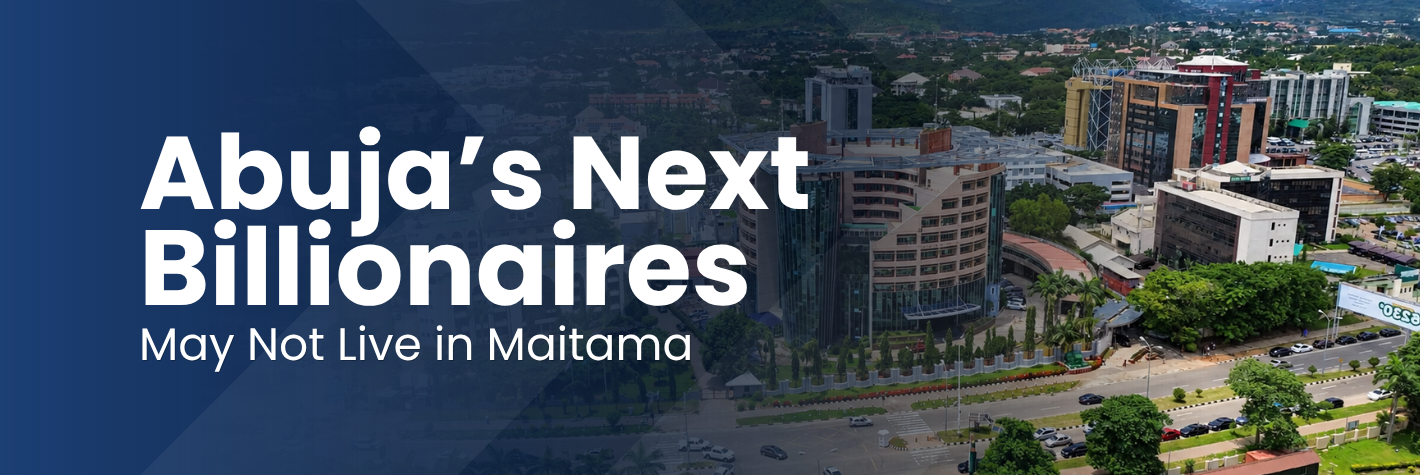
Abuja’s Next Billionaires May Not Live in Maitama

Abuja’s Next Billionaires May Not Live in Maitama

For decades, when people talked about wealth in Abuja, certain addresses immediately came to mind.

Maitama.

Asokoro.

Wuse 2.

These are established districts. They have premium properties, strong infrastructure, proximity to major institutions and some of the city’s highest property values.

But there is another side to Abuja’s real estate story.

What if the next generation of property wealth is created somewhere that does not look like Maitama today?

That is the question investors should be asking.

Because in a city that is still expanding, wealth is not created only by owning property in the most expensive neighbourhoods.

Sometimes, it is created by identifying where the city is going next.

And Abuja is going next in several directions.


Maitama Is Already Established. The Opportunity Is Somewhere Else.

There is nothing wrong with investing in Maitama.

In fact, established districts have advantages that emerging areas may take years to develop.

Maitama has infrastructure, established demand, premium housing and proximity to major parts of the city.

But there is a fundamental difference between buying into an established market and buying into an emerging one.

When you buy in an established location, you are often paying for the value that has already been created.

When you buy in an emerging location, you are potentially positioning yourself before the area reaches maturity.

That distinction is important.

A plot of land in a developing corridor may cost significantly less than property in a prime district, but it may also require more patience, stronger due diligence and a willingness to wait for infrastructure and demand to develop.

The opportunity is not that every developing area will become the next Maitama.

It is that some areas will grow significantly as Abuja expands.


Abuja Is Becoming Bigger Than Its Traditional Core

Abuja was planned as a city with a central core and satellite towns.

The FCDA’s planning framework includes satellite towns such as Kuje, Bwari, Karshi, Kubwa, Kusaki Yanga and Dobi, with infrastructure and linkages intended to connect these communities to the Federal Capital City.

That tells us something important.

The expansion of Abuja is not an accident.

The city was designed to grow beyond its original centre.

Today, that expansion is becoming increasingly visible.

Infrastructure is opening up previously less accessible locations, while developers are building housing and commercial projects around emerging corridors.

Recent reporting has identified areas including Karsana, Idu, Lugbe and Kuje among locations attracting increased development and investor attention as connectivity improves.

So when you think about Abuja’s real estate market, you should not only ask:

“Where is Abuja expensive today?”

You should also ask:

“Where is Abuja expanding?”


Real Estate Wealth Is Often About Timing

Consider two investors.

Investor A buys a property in an established district after the area has already become highly developed.

Investor B buys land in an emerging corridor when roads, businesses and housing are still developing around it.

They are making two very different investment decisions.

Investor A is buying certainty and established demand.

Investor B is buying potential and time.

Neither approach is automatically better.

But the second approach can create a different opportunity for investors who are willing to wait.

The challenge is identifying whether an area is genuinely developing or simply being marketed as “the next big thing.”

That is where research becomes important.


What Actually Turns an Emerging Area Into a Valuable One?

Not every undeveloped area becomes a property hotspot.

Empty land is not the same thing as future value.

For an emerging location to become more valuable, several things usually need to happen.

Infrastructure

Roads, drainage, electricity, water and other infrastructure can make previously difficult-to-reach areas more practical for residents and businesses.

Accessibility

A location becomes more attractive when people can move easily between it and important employment, commercial and residential centres.

Population Growth

More people create more demand for housing, shops, offices, schools, healthcare and other services.

Economic Activity

Businesses create jobs, customers and movement.

Development

When reputable developers begin building homes, estates, commercial centres and other facilities, it can be a sign that the market is becoming more active.

Demand

Ultimately, somebody has to want to live, work, shop or invest there.

Infrastructure alone does not create a property market.

Infrastructure + accessibility + people + economic activity + demand are much more meaningful.


Watch the Roads, Not Just the Buildings

If you want to understand where Abuja is heading, watch the infrastructure.

A new road can change how people perceive distance.

A new interchange can make a previously inconvenient location easier to reach.

Improved connectivity can make it possible for people to live farther from the city centre while still commuting to work.

This relationship between infrastructure and property is already visible across Abuja.

Recent property-market reporting has linked infrastructure development to increased activity in districts including Guzape, Katampe, Jahi, Karsana, Idu, Lugbe and Kuje.

But investors need to go one step further.

Do not simply ask:

“Is there a road project?”

Ask:

“What does the road connect?”

That is a much more useful question.


The Next Big Property Story May Be Along a Corridor

One neighbourhood does not necessarily create a property boom by itself.

Sometimes, growth happens along an entire corridor.

As accessibility improves, development can spread from one district into neighbouring areas.

You may begin with housing.

Then come shops.

Then schools.

Then offices.

Then hospitality.

Then larger residential developments.

Eventually, what used to be considered an “outskirts” becomes part of the city’s normal daily movement.

This is one reason investors should pay attention to growth corridors, rather than looking at individual locations in isolation.


Which Parts of Abuja Should Investors Watch?

There is no single list of locations that will automatically become Abuja’s next premium districts.

But several emerging and expanding corridors deserve attention because of their relationship with infrastructure, housing demand and urban expansion.

Ketti-Kabusa and the Southwest Corridor

Ketti-Kabusa sits within a part of Abuja where residential development and land investment continue to attract attention.

For investors, the important question is not simply whether land is affordable.

It is what is happening around the location.

What roads are being developed?

What communities are expanding?

What estates are coming up?

How accessible is the property?

And what type of demand could eventually emerge?

These questions matter more than simply buying because the price looks low.


Kuje

Kuje is one of the FCT’s designated satellite towns, and its connection to the broader Abuja development system makes it an area worth studying.

Its position along the southwest growth direction has also attracted increasing housing and investment activity.

But again, investors should avoid treating the entire area as one market.

A property close to good infrastructure can have a very different investment profile from another property several kilometres away.

Micro-location matters.


Karsana and the Northern Growth Belt

Karsana is another area that has increasingly entered Abuja’s property conversation.

Infrastructure improvements and residential development are helping shift attention toward several northern and northwestern districts.

For investors, the question is whether development is creating genuine demand rather than simply increasing speculative activity.

That distinction matters.


Kyami and the Airport Corridor

The Airport Road axis is increasingly being discussed as more than simply a route to Nnamdi Azikiwe International Airport.

Recent analysis of Abuja’s future growth has identified the Airport Road axis, Kuje and Kyami among areas that could develop stronger commercial and residential activity as the city becomes more polycentric.

For property investors, that creates an interesting dynamic.

When a corridor connects housing, transportation, commercial activity and major destinations, the land around it can become increasingly relevant.

But once again, potential is not a guarantee.


You Don’t Need to Buy in Maitama to Build a Property Portfolio

There is a psychological trap in real estate.

People often believe that expensive property equals better investment.

It is easy to understand why.

If a property in Maitama is worth hundreds of millions of naira, it feels more valuable than a plot in an emerging district.

But investment is not simply about the price of an asset.

It is about:

Entry price.

Demand.

Growth.

Time horizon.

Income potential.

Liquidity.

Risk.

A lower-priced property in a developing corridor may provide a different path to building a portfolio.

For example, an investor with ₦100 million may choose to purchase one expensive property in an established district.

Another investor may use the same capital differently, acquiring multiple assets at earlier stages of development.

The outcome will depend on the properties selected, their documentation, location, development trajectory and market conditions.

There is no guaranteed formula.

But the example illustrates an important principle:

You do not have to buy the most expensive property in Abuja to participate in Abuja’s growth.


The Billionaire Mindset Is Not About Buying Cheap Land

This is where the conversation needs some discipline.

“Buy cheap land and wait” is not an investment strategy by itself.

Cheap land can remain cheap.

Sometimes for years.

Sometimes permanently.

The real question is:

Why is the land cheap?

If the answer is that infrastructure is missing, demand is weak, the title is unclear or the location is poorly connected, a low price may simply reflect a high level of risk.

But if the price is relatively low because the area is still developing while infrastructure and economic activity are moving toward it, the situation becomes more interesting.

This is why sophisticated property investors do not simply hunt for cheap land.

They hunt for mispriced potential.


What Should You Look For Before Buying in an Emerging Area?

If you are considering an emerging Abuja location, examine at least these factors.

1. Title and Documentation

Before thinking about appreciation, establish that the property itself is properly documented.

2. Road Access

Do not rely on promises of future roads.

Look at what exists today and verify major projects that are expected to improve access.

3. Existing Development

Are reputable developers already building around the area?

4. Population

Are people actually moving into the area?

5. Commercial Activity

Are businesses following the residential development?

6. Infrastructure

Look beyond roads. Consider electricity, water, drainage, telecommunications and other essential services.

7. Demand

Who will eventually buy, rent or occupy the property?

8. Your Time Horizon

Emerging-location investments may require patience.

If you need immediate rental income, a developing corridor may not be the right fit.


Don’t Confuse Speculation With Growth

This is one of the most important lessons for investors.

An area can have plenty of land transactions without having a healthy real estate market.

Speculation happens when people buy simply because they expect someone else to pay more later.

Growth is different.

Growth happens when:

  • People move in.
  • Businesses open.
  • Roads improve.
  • Homes are built.
  • Services become available.
  • Economic activity increases.
  • Demand becomes more sustainable.

You want to understand whether the area is experiencing real development, not just land flipping.


Abuja’s Future May Be Polycentric

There is another major shift investors should watch.

Abuja may increasingly function as a city with multiple economic and commercial centres rather than one dominant core.

A September 2026 analysis cited real estate expert Ijeomah, who argued that satellite communities could become increasingly integrated into Abuja’s everyday economy, with secondary commercial nodes developing around corridors such as Airport Road, Kubwa/Bwari, Kuje, Kyami and Apo/Karshi.

Whether every part of that projection materialises remains to be seen.

But the underlying idea is important:

A growing city does not necessarily keep all its economic activity in one centre.

As housing becomes more expensive in established districts and infrastructure improves elsewhere, businesses and residents can spread outward.

That creates new property markets.


The Question Investors Should Be Asking

Instead of asking:

“Is this the next Maitama?”

Ask:

“What is happening here that could make this location more valuable five or ten years from now?”

That question forces you to look at evidence.

You begin studying infrastructure.

You look at population.

You examine development.

You investigate title.

You compare prices.

You identify the people who will eventually demand the property.

And most importantly, you stop investing based solely on hype.


The Next Generation of Abuja Property Wealth

The next generation of wealthy property investors may not necessarily live in Maitama.

They may own properties in Maitama.

They may own properties in Asokoro.

But they may also own land, apartments, commercial property and development sites in locations that many people currently consider “far.”

Because the real advantage in a growing city is not always being in the most prestigious location.

Sometimes, it is being early enough to understand where the city is going.

Abuja is expanding.

The infrastructure network is changing.

New residential communities are emerging.

Commercial activity is spreading.

And satellite towns are becoming increasingly important to the capital’s long-term development framework.

That does not mean every emerging district will become a premium neighbourhood.

It means investors have more locations to study—and more opportunities to think beyond the traditional Abuja property map.


Investing Beyond the Traditional Abuja Address

At NeoHomes Limited, we believe real estate investment should not be driven by the prestige of an address alone.

It should be driven by understanding the location, the documentation, the infrastructure, the demand and the development story behind the property.

That is why our growing portfolio extends across different parts of Abuja, including Kyami, Kuje, Karsana, Kabusa and Ketti-Kabusa, among other emerging and established locations.

The goal is not to tell every investor that one particular district is “the next big thing.”

The goal is to help buyers identify opportunities that align with their budget, investment horizon and objectives.

Because Maitama may represent the Abuja that has already been built.

But the Abuja that is still being built may create a very different set of opportunities.

And sometimes, the most important address in real estate is not where the city is today.

It is where the city is going next.

NeoHomes Limited — Peace Beyond Shelter.
CategoriesUncategorized

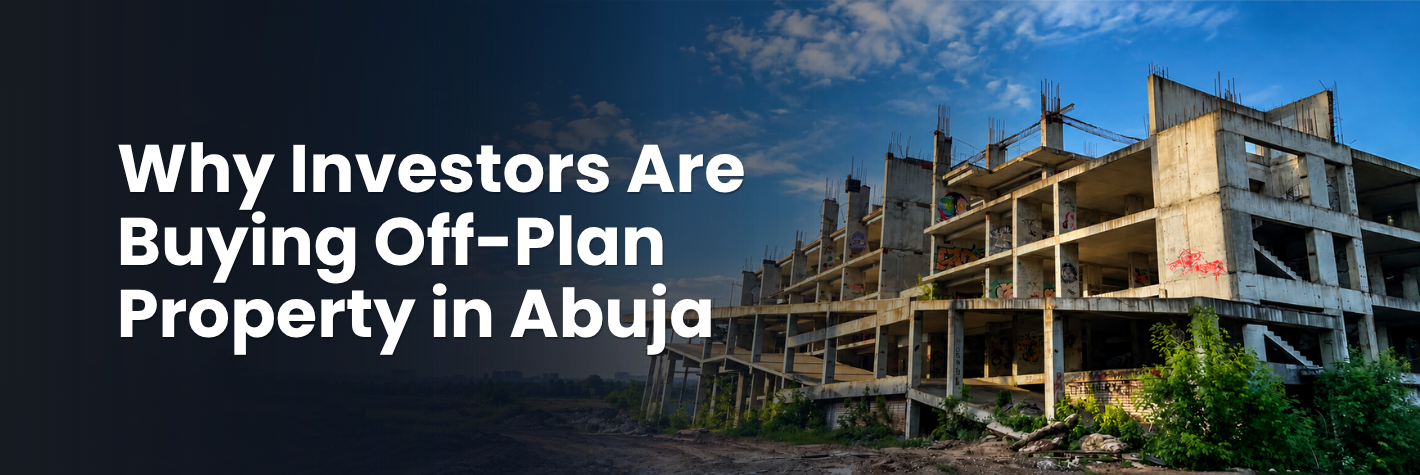
Why Investors Are Buying Off-Plan Property in Abuja

Why Investors Are Buying Off-Plan Property in Abuja

Imagine finding a property in Abuja, securing it at today’s price, and receiving the keys to a completed apartment after construction.

That is the basic idea behind off-plan property investment.

Instead of waiting until a building is completed and then buying at the prevailing market price, investors commit to a property while it is still under development.

For some buyers, that means getting into the market earlier.

For others, it is about spreading the cost of acquiring the property while construction takes place.

And for investors, there is another important consideration: the potential difference between what you pay at the off-plan stage and what the property could be worth when it is completed.

Off-plan property has become increasingly visible in Abuja’s real estate market, particularly as developers introduce apartments and residential projects in growing locations. Recent Nigerian property-market coverage highlights lower entry prices, staged payment structures and potential appreciation as some of the reasons buyers consider off-plan purchases.

But what exactly makes it attractive?

And more importantly, what should you know before buying one?

What Does Off-Plan Property Mean?

Simply put, off-plan property is property purchased before construction is completed.

Depending on the project, construction may already be underway or the property may still be at an early development stage.

Instead of physically inspecting a completed apartment, buyers typically make their decision based on things such as:

  • Architectural drawings

  • Floor plans

  • 3D renders

  • Development specifications

  • Location

  • Payment structure

  • Construction plans

  • Developer track record

  • Expected completion timeline

The buyer is essentially purchasing into the future completed property.

This is different from buying a completed apartment where you can walk through the exact unit, inspect the finishes and take possession immediately.

And that difference is precisely where both the opportunity and the risk lie.

Why Are Investors Interested in Off-Plan Property in Abuja

For many, it comes down to a combination of price, payment flexibility, location and timing.

1. The Opportunity to Enter at an Earlier Price

One of the biggest attractions of off-plan property is the possibility of securing a unit before completion at an early-stage price.

Developers may price units competitively during the initial sales phase to attract early buyers and generate the capital needed to progress construction. Off-plan purchases can therefore allow buyers to lock in a price before later stages of development.

For example, consider an apartment that is being offered at:

₦25 million at the off-plan stage.

If the same apartment is worth more by the time construction is completed, the early buyer has potentially captured that difference.

That does not mean appreciation is guaranteed.

Property values can move up or down depending on location, demand, infrastructure, construction quality and wider economic conditions.

But the possibility of entering earlier is one of the reasons off-plan attracts investors.

2. Buyers Can Potentially Lock In Today’s Price

Nigeria’s construction industry operates in an environment where the cost of building materials and other inputs can change significantly.

That creates an interesting dynamic for property buyers.

If you wait until a project is completed, you may be buying at a price that reflects the developer’s accumulated construction costs and the prevailing market conditions at that time.

Buying earlier can allow an investor to secure the agreed purchase price before those future costs are reflected in the completed property’s selling price.

This is one reason off-plan can be particularly attractive during periods of rising construction costs.

However, buyers should read the contract carefully.

A buyer should understand whether the agreed price is genuinely fixed and whether there are additional charges that may become payable before handover.

3. Payment Can Be More Manageable

Another reason investors consider off-plan property is the possibility of staged payments.

Rather than paying the entire purchase price for a completed apartment at once, some developers structure off-plan purchases around instalments.

This can make property acquisition easier to plan financially.

For example, instead of needing the entire purchase price immediately, an investor may be able to make an initial commitment and pay the balance according to an agreed schedule.

The exact structure varies from project to project, which is why buyers should understand the payment schedule before signing.

4. You Get Into the Market Before Completion

Timing matters in real estate.

By the time an apartment is completed, the surrounding development may have changed.

The roads may be more developed.

More businesses may have moved into the area.

More residents may have moved in.

The development itself may have established a stronger market presence.

An investor who purchased earlier may therefore have entered the project before some of those developments occurred.

Again, this is not a promise of appreciation.

It is simply one of the reasons investors are interested in entering developments during their earlier stages.

5. Early Buyers May Have More Choice

Buying early can also provide more options.

Depending on the project, early buyers may have a wider choice of:

  • Unit type

  • Floor

  • Orientation

  • Position within the development

  • Available views

  • Specific apartment configuration

Once a development is substantially sold, those choices can become limited.

For investors thinking about rental demand or eventual resale, selecting the right unit can be an important part of the decision.

6. Off-Plan Can Give Investors Access to Newer Housing

Another attraction is the opportunity to own a modern apartment designed around contemporary expectations.

New developments may incorporate features such as:

  • Modern layouts

  • Dedicated parking

  • Security systems

  • Recreational areas

  • Contemporary finishes

  • Estate management

  • Power solutions

  • Efficient use of space

For an investor, these features can matter because the eventual tenant or buyer is not only purchasing square metres.

They are buying into a living environment.

A Real Example: Belle Vista, Kyami

This is where the concept becomes more practical.

At Belle Vista, Kyami, NeoHomes currently has apartments available at the off-plan stage.

The current offer includes:

1-Bedroom Apartment

₦25 million

2-Bedroom Apartment

₦35 million

These are off-plan opportunities, meaning buyers are securing the apartments before completion.

The appeal is not simply the price.

It is the opportunity to secure a unit early in the development cycle and potentially benefit from the value created as construction progresses and the development takes shape.

For an investor, the question is therefore not only:

“What is this apartment worth today?”

It is also:

“What could this property be worth when the development is completed, and what will the surrounding area look like by then?”

That is the thinking behind many off-plan investment decisions.

Why Location Still Matters With Off-Plan Property

Buying off-plan does not remove the importance of location.

In fact, it arguably makes location even more important.

When you buy a completed apartment, you can see the finished building and the surrounding environment.

With an off-plan property, you are making a decision partly based on what the development is expected to become.

That means you need to examine the location carefully.

Look at Accessibility

How easy is it to get to the property?

What major roads connect the location to other parts of Abuja?

Look at Surrounding Development

What is being developed around the property?

Are there residential communities, commercial centres, schools, hospitals or other facilities nearby?

Look at Infrastructure

What infrastructure exists today?

What is being planned?

And importantly, which infrastructure is actually funded or under construction rather than simply mentioned in marketing materials?

Look at Demand

Who is likely to live there?

Families?

Young professionals?

Corporate tenants?

Short-let users?

Students?

Government workers?

Understanding the potential tenant or buyer profile is important if your objective is investment rather than personal residence.

Off-Plan Is Not the Same as “Cheap”

This is an important distinction.

An off-plan property should not be judged simply because its initial price appears lower than the price of a completed property.

The real question is what are you getting for the price?

Consider:

  • Location

  • Size

  • Layout

  • Finishing specifications

  • Infrastructure

  • Amenities

  • Title

  • Developer track record

  • Payment terms

  • Completion timeline

  • Service charges

  • Additional fees

A ₦25 million apartment is not necessarily a better investment than a ₦30 million apartment simply because it costs less.

The property has to make sense relative to what it offers.

What Are the Risks of Buying Off-Plan?

The benefits are attractive, but investors should not ignore the risks.

1. Construction Delays

One of the most common concerns with off-plan property is delay.

Construction can be affected by:

  • Funding

  • Approval processes

  • Material costs

  • Contractor performance

  • Labour

  • Economic conditions

  • Changes during construction

A project expected to be completed within a particular timeframe can take longer.

That can affect an investor’s plans for rental income, resale or personal occupation. Nigerian property sources consistently identify construction delays as a significant off-plan risk.

2. Developer Reliability

You are not only buying a property.

You are placing confidence in the developer’s ability to deliver what was promised.

Before committing money, investigate the developer.

Look at:

  • Previous projects

  • Completed developments

  • Delivery history

  • Corporate information

  • Construction quality

  • Customer experience

  • Documentation

A beautiful render does not complete a building.

Execution does.

3. What You See in the Render Is Not the Finished Building

Architectural renders show what a project is intended to look like.

They are not necessarily a guarantee that every visual element will appear exactly as shown.

This is why buyers should request the project’s specifications and ensure important details are clearly captured in the contractual documentation.

Questions about finishing materials, unit size, amenities, parking, infrastructure and other promised features should be addressed before payment.

4. Your Money Is Committed Before You Can Use the Property

With an off-plan purchase, you generally do not receive immediate possession.

Your capital may be tied up throughout the construction period.

That means your investment horizon matters.

If you need a property that generates rental income immediately, a completed apartment may be more appropriate.

If you are comfortable waiting for construction and are focused on the longer term, off-plan may be worth considering.

What Should You Check Before Buying Off-Plan?

Before paying for any off-plan property in Abuja, do your homework.

Check the Land and Property Documentation

Understand the legal basis of the development and the documentation supporting the property.

Where appropriate, have an independent lawyer conduct the necessary searches and review the transaction documents.

Check the Developer

Do not rely entirely on advertising.

Look at the developer’s previous delivery record and completed projects.

Read the Agreement

Pay attention to:

  • Payment obligations

  • Completion timeline

  • Handover conditions

  • Cancellation terms

  • Refund provisions

  • Default clauses

  • Specification changes

  • Additional fees

  • Service charges

Recent reporting on Abuja off-plan transactions has highlighted the importance of reviewing contractual clauses, title documentation and additional charges before committing funds.

Understand the Total Cost

The advertised property price may not necessarily represent the total cost of ownership.

Ask about:

  • Legal fees

  • Documentation

  • Service charges

  • Infrastructure fees

  • Utility connections

  • Parking

  • Other applicable charges

Knowing the full financial commitment allows you to make a better comparison.

Who Is Off-Plan Property Suitable For?

Off-plan property may appeal to different types of buyers.

The Long-Term Investor

Someone who is willing to hold the property beyond completion may be interested in the potential for capital appreciation and rental income.

The First-Time Property Investor

For someone who cannot comfortably purchase a completed apartment outright, a structured payment arrangement may provide another route into property ownership.

The Buyer Looking for a New Home

Some buyers may prefer to secure a new apartment early and move in once construction is complete.

The Resale Investor

An investor may purchase early with the intention of selling later, although resale value is never guaranteed and should not be assumed.

The key is matching the property to your financial capacity and investment objective.

Is Off-Plan Property a Guaranteed Way to Make Money?

No.

And investors should be cautious of anyone presenting it that way.

Off-plan property can create an opportunity to enter early, but the outcome depends on multiple factors.

A property’s value can be influenced by:

  • Location

  • Infrastructure

  • Demand

  • Construction quality

  • Developer performance

  • Market conditions

  • Purchase price

  • Completion timeline

  • Rental demand

The right question is therefore not:

“Will I definitely make money?”

It is:

“Does the property, developer, location, price and investment timeline make sense for my objective?”

That is a much better way to evaluate an off-plan opportunity.

Why Abuja Remains Interesting for Off-Plan Development

Abuja continues to expand beyond its traditional central districts.

As the city’s population grows and development spreads into new districts and corridors, developers are creating housing options to meet different segments of the market.

This creates opportunities for investors to enter developments at different stages.

But Abuja is not one uniform property market.

Maitama is different from Kyami.

Kyami is different from Kuje.

Kuje is different from Ketti-Kabusa.

And each location has its own infrastructure, demand profile, accessibility and development trajectory.

That is why the specific property and location matter more than simply buying something because it is labelled “off-plan.”

The Opportunity at Belle Vista, Kyami

For investors considering an off-plan apartment in Abuja, Belle Vista, Kyami offers a practical example of how the model works.

With the current off-plan offering of:

1 Bedroom — ₦25 million

2 Bedrooms — ₦35 million

buyers have an opportunity to secure a unit before completion rather than waiting until the development is fully built.

The investment consideration goes beyond the initial price.

Kyami’s position within Abuja’s expanding development landscape makes the location itself an important part of the conversation.

For someone considering the property as an investment, the questions should include:

  • What is the purchase price?

  • What is the payment structure?

  • What is the expected completion timeline?

  • What will the completed unit offer?

  • What type of tenant or buyer is likely to demand the property?

  • What is happening around Kyami?

  • What is the long-term purpose of the investment?

Those questions help turn an off-plan purchase from an impulse decision into an investment decision.

Final Thoughts: Why Investors Are Buying Off-Plan Property in Abuja

Off-plan property offers something that completed property cannot always offer:

early access.

You get the opportunity to enter a development before completion, potentially secure an early price, spread your payments and select from available units.

But early access comes with responsibility.

You must investigate the developer.

You must understand the documentation.

You must examine the location.

You must read the contract.

And you must be comfortable with the construction timeline.

For investors, the appeal of off-plan is not simply that a property is cheaper before it is built.

It is the possibility of getting into the right property, in the right location, at the right stage of development.

Investing Early With NeoHomes

At NeoHomes, we understand that property investment is not simply about finding a building and paying for it.

It is about understanding the location, the opportunity, the development stage and the long-term purpose of the property.

That is why our portfolio continues to include opportunities across Abuja’s growing real estate landscape.

At Belle Vista, Kyami, NeoHomes currently offers off-plan apartments starting from ₦25 million for a 1-bedroom apartment and ₦35 million for a 2-bedroom apartment, giving buyers an opportunity to secure their unit before completion.

For someone looking to enter the Abuja apartment market early, it is an opportunity worth understanding, not simply because it is off-plan, but because the property, location and investment objective need to work together.

As an emerging and forward-thinking real estate company, NeoHomes continues to expand its portfolio across multiple locations in Abuja, creating more opportunities for buyers and investors to find properties suited to different budgets and investment goals.

Sometimes, the biggest advantage in real estate is not buying when everyone is ready.

It is understanding the opportunity early.

NeoHomes Limited — Peace Beyond Shelter.
CategoriesUncategorized

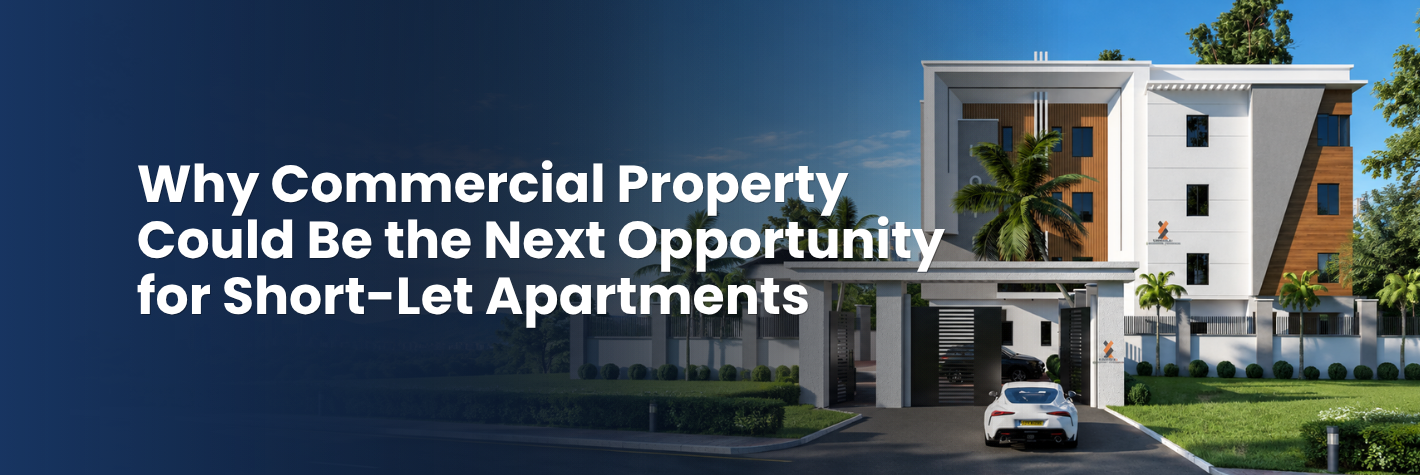
Abuja Is Building Up: Why Commercial Property Could Be the Next Opportunity for Short-Let Apartments

Abuja Is Building Up: Why Commercial Property Could Be the Next Opportunity for Short-Let Apartments

Abuja has always been a city built around movement.

People move into the capital for government work, business meetings, conferences, consulting assignments, diplomatic engagements, construction projects, family events and, increasingly, investment opportunities.

But Abuja is changing.

As the city expands beyond its traditional districts, new roads and infrastructure connect previously overlooked areas to established commercial and residential centres. At the same time, the demand for flexible accommodation continues to create opportunities for property owners who understand what modern visitors actually want.

This raises an important question for property investors:

Could commercial property and strategically located apartments positioned for short-let use become one of the opportunities worth watching in Abuja?

The answer is not simply about buying an apartment and listing it online.

It comes down to location, accessibility, permitted use, demand, property design, operating costs and how well the property serves the people who need accommodation.

Here is what investors should understand.


What Is Driving Abuja’s Property Growth?

Abuja’s growth is no longer concentrated only around the traditional districts of Maitama, Asokoro, Wuse and Garki.

Infrastructure development is helping open up new parts of the city, with districts such as Katampe, Guzape, Jahi, Karsana, Idu, Lugbe and Kuje attracting increased attention from developers and investors. Recent reporting has linked improved roads and other infrastructure to growing interest in emerging areas.

This matters because real estate follows activity.

When businesses move into an area, people follow.

When roads improve, accessibility changes.

When commercial centres develop, employees, consultants, customers and visitors need places to stay.

And when an area becomes easier to reach, property owners have more opportunities to serve both residential and commercial demand.

This is one reason investors should look beyond what an area looks like today and consider what is developing around it.


Why Short-Let Apartments Are Becoming More Relevant

The traditional model of buying a property and renting it out annually is still relevant.

But short-let apartments operate differently.

Instead of one tenant occupying the property for an extended period, the property can accommodate different guests for shorter periods, depending on the property’s permitted use, management model and market demand.

In Abuja, the potential customer base is diverse.

It can include:

  • Business travellers
  • Consultants and contractors
  • Corporate employees
  • Conference attendees
  • NGO and development-sector workers
  • Visitors attending events
  • Families visiting Abuja
  • People relocating temporarily
  • Professionals working on short-term assignments

Recent market reports also point to business and professional travel as important demand drivers for Abuja’s short-let sector.

This is particularly interesting because Abuja is not simply a tourism destination.

It is an administrative, diplomatic and business centre.

That creates a different type of accommodation demand.


Commercial Activity Can Create Accommodation Demand

Think about what happens when a commercial district develops.

You have offices.

You have restaurants.

You have retail outlets.

You have conference and event spaces.

You have professionals travelling in and out.

You have companies bringing in consultants and project teams.

You have visitors who may only need accommodation for a few nights or weeks.

This is where commercial property and short-let apartments can intersect.

A strategically positioned apartment may serve a different purpose from a conventional residential rental.

Instead of asking only:

“Who wants to live here for a year?”

the investor can also consider:

“Who needs to stay here for three nights, two weeks or one month?”

That difference can influence how a property is designed, furnished, managed and marketed.


Abuja’s Short-Let Market Is Becoming More Competitive

There is, however, another side to the story.

The growth of short-let apartments means investors are not entering an empty market.

AirDNA’s September 2026 data records 913 active short-term rental listings in Abuja, with an average occupancy rate of 42%. The data also shows that the number of active listings has increased significantly year-on-year.

That tells us something important:

Demand may exist, but competition exists too.

Simply owning an apartment does not automatically make it a successful short-let.

Guests have choices.

They compare:

  • Location
  • Price
  • Interior quality
  • Security
  • Power supply
  • Internet connectivity
  • Water
  • Parking
  • Cleanliness
  • Customer service
  • Reviews
  • Ease of access

So the investment conversation should not stop at purchasing the property.

It should continue into operations.


Location Could Matter More Than Luxury

One of the biggest mistakes investors can make is assuming that the most expensive apartment automatically makes the best short-let.

That is not necessarily the case.

For short-let apartments, convenience can be more valuable than extravagance.

A well-furnished apartment that is close to a business district, major road, event centre or important destination may have a stronger proposition than a more luxurious apartment that requires a long commute.

This is why investors should study the movement patterns around a property.

Ask:

Where are people going?

Why are they going there?

How long are they staying?

How easily can they get there from the property?

What other accommodation options are available nearby?

These questions can reveal more than simply looking at the property itself.


Infrastructure Changes the Investment Conversation

In a growing city like Abuja, infrastructure can change the attractiveness of a location.

Improved roads can shorten travel times.

New commercial developments can bring businesses closer.

Better connectivity can make previously distant districts more accessible.

Recent reporting on Abuja’s property market has highlighted how infrastructure improvements are contributing to increased development and investor interest in several emerging districts.

For a short-let investor, accessibility matters because guests are usually buying more than a room.

They are buying convenience.

If an apartment allows a guest to easily reach their meeting, office, event, airport or other destination, the location becomes part of the product.


What Makes a Property Suitable for Short-Let?

Before buying a property with short-let plans, investors should look beyond the number of bedrooms.

A good short-let property needs to function operationally.

1. Accessibility

Guests should be able to reach the property without unnecessary difficulty.

2. Security

Security is particularly important in Abuja, especially for business travellers and professionals who may be unfamiliar with the area.

3. Reliable utilities

Electricity, water and internet connectivity can significantly affect the guest experience.

4. Parking

For many Abuja visitors, parking is not a luxury. It is part of the accommodation decision.

5. Practical layout

A well-designed one- or two-bedroom apartment can sometimes be easier to operate than a larger property with excessive space.

6. Proximity to demand

The property should be close enough to the people and activities that generate accommodation demand.

7. Permitted use

This is critical.

Not every residential property or estate automatically permits short-let operations.

Before purchasing, investors should confirm the property’s approved use, estate rules, title documentation and any applicable restrictions.


Short-Let Property Is a Business, Not Just a Property

This is perhaps the most important point.

Buying an apartment is a real estate transaction.

Running a short-let is an operating business.

There is a difference.

The property may require:

  • Furniture
  • Appliances
  • Interior decoration
  • Cleaning
  • Maintenance
  • Security
  • Internet
  • Power backup
  • Guest management
  • Marketing
  • Booking management
  • Repairs
  • Property management fees

These expenses can significantly affect the actual financial performance of the property.

This is why investors should avoid calculating potential returns by simply multiplying a nightly rate by 30 days.

A property that is advertised at ₦100,000 per night does not automatically generate ₦3 million every month.

Occupancy varies.

Rates vary.

Expenses vary.

And demand can change.

The right question is not:

“How much can I charge per night?”

It is:

“What does the property realistically need to earn after vacancies and operating expenses?”


Commercial Property Could Offer More Than One Revenue Strategy

Another reason commercial and mixed-use developments are worth watching is flexibility.

Depending on the property’s approved use and development structure, a strategically located property may serve different purposes over time.

For example, an investor could potentially consider:

  • Traditional rental
  • Corporate accommodation
  • Serviced apartments
  • Short-let accommodation
  • Office use
  • Retail or commercial use

Of course, these options are not automatically interchangeable.

Planning regulations, title conditions, development approvals and estate restrictions must be considered before changing the use of a property.

But the broader point remains:

A property positioned around commercial activity can potentially have multiple demand drivers.

That can be valuable in a changing market.


Why Investors Should Watch Emerging Locations

The centre of Abuja will always attract attention.

But the future of Abuja’s property market is not limited to the city centre.

As infrastructure expands and development moves outward, investors are increasingly looking at locations that were previously considered peripheral.

This creates an interesting investment question:

Should you only invest where demand is already obvious, or should you also study areas where infrastructure and commercial activity are creating the next layer of demand?

There is no universal answer.

But investors who study emerging locations early can better understand how an area is developing before making a purchase decision.

The key is not simply to buy because a road is being constructed or because a new building is going up.

You need to understand what that infrastructure is connecting, who it will serve and what economic activity is developing around it.


What Are the Risks?

Short-let investment can be attractive, but it comes with risks.

Occupancy risk

A property may not be occupied every night.

Competition

More apartments entering the market can put pressure on pricing.

Operating costs

Power, cleaning, maintenance, furnishing and management can reduce net income.

Regulatory and estate restrictions

Short-let operations may not be permitted in every development.

Management risk

Poor guest management can result in negative reviews and repeat vacancies.

Market risk

Demand can change as businesses, infrastructure and consumer preferences change.

Capital expenditure

Furniture and appliances eventually need repairs or replacement.

These risks do not make short-let property unattractive.

They simply mean that investors should approach it as a business model, rather than assuming every apartment will automatically become a high-performing short-let.


So, Is Commercial Property the Next Opportunity for Short-Let Apartments in Abuja?

It could be, but the opportunity is likely to be more specific than simply “buy a commercial property.”

The stronger question is:

Where is Abuja’s commercial activity going, and what kind of accommodation will the people around that activity need?

That is where the opportunity becomes interesting.

An apartment near business activity, with good accessibility, appropriate approvals, reliable infrastructure and professional management may be positioned differently from an apartment that has none of those advantages.

And as Abuja continues to develop, investors may increasingly need to think beyond the traditional definition of residential property.

The line between where people live, where they work and where they stay temporarily is becoming more fluid.


What Should You Check Before Investing?

Before committing your money, consider these questions:

1. Is the property legally approved for the intended use?

2. What type of demand exists around the location?

3. Who is likely to occupy the property?

4. How accessible is the property?

5. What competing short-let properties already exist nearby?

6. What are the furnishing and setup costs?

7. What will electricity, water, internet and maintenance cost?

8. Who will manage the property?

9. What happens during periods of low occupancy?

10. Is there a backup strategy if short-let demand changes?

These questions can help separate a property purchase from a genuine investment decision.


The Bigger Opportunity: Investing With Abuja’s Growth in Mind

Abuja is not standing still.

The city is expanding, infrastructure is changing how people move, commercial activity is spreading and accommodation preferences are evolving.

For property investors, this creates opportunities, but also demands better research.

The next successful property investment may not simply be the property with the biggest building or the highest advertised rental price.

It may be the property that sits in the right location, serves a real demand and remains useful as the surrounding area develops.

That is why commercial property and short-let apartments deserve closer attention as Abuja continues to build up.

Not because every apartment will produce exceptional returns.

But because understanding where people, businesses and infrastructure are moving can help investors make more informed property decisions.


Investing With Abuja’s Growth in Mind

At NeoHomes Limited, we believe real estate investment should go beyond buying property. It should begin with understanding location, development, infrastructure and the people who will ultimately use the property.

Our growing portfolio across Abuja gives investors access to opportunities in different parts of the city’s expanding development landscape, from Kyami and Kuje to Karsana, Kabusa, Ketti-Kabusa and other emerging locations.

Whether you are considering land for future development, an apartment for personal use or a property with potential for rental and commercial applications, the goal should always be the same: buy with information, understand the location and invest with the future in mind.

Because Abuja is building up.

And the investors paying attention today will be better positioned to understand the opportunities that tomorrow’s Abuja may create.

NeoHomes Limited — Peace Beyond Shelter.
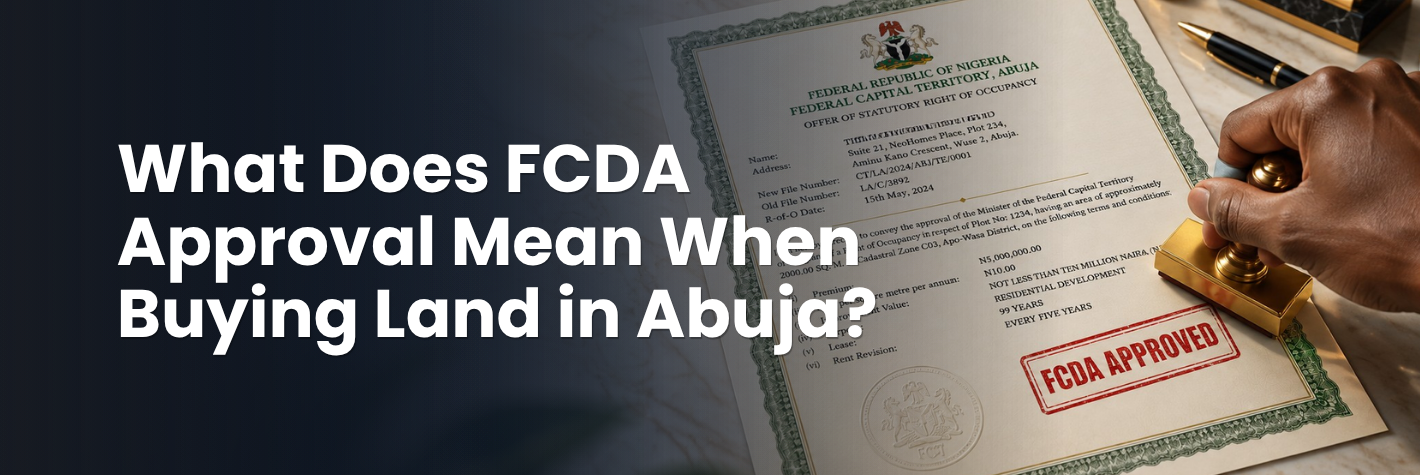
CategoriesUncategorized

What Does FCDA Approval Mean When Buying Land in Abuja?

What Does FCDA Approval Mean When Buying Land in Abuja?

When searching for land in Abuja, one phrase appears again and again: “FCDA approved.”

For many buyers, those two words are enough to create a sense of security. But an important question remains: what does FCDA approval actually tell you about a piece of land?

Does it mean you already have a Certificate of Occupancy? Does it prove ownership? Does it mean construction can begin immediately?

Not necessarily.

Understanding the difference between planning approval, land use, allocation and title documentation is an essential part of buying land in Abuja. The Federal Capital Development Authority (FCDA) was established to oversee the planning, development and administration of Abuja and the wider Federal Capital Territory, including planning the city and providing infrastructure in line with the Abuja Master Plan.

So before you hear “FCDA approved” and reach for your cheque book, here is what you should know.

First, What Is the FCDA?

The Federal Capital Development Authority, commonly called the FCDA, was created after the establishment of the Federal Capital Territory in 1976. It was given responsibility for planning, designing and developing the new federal capital.

One of its important functions is overseeing physical planning and development within the FCT.

Its Department of Urban and Regional Planning is responsible for physical planning and development monitoring. Its responsibilities include preparing and monitoring development plans, evaluating development applications, and coordinating matters such as changes of land use, subdivisions and plot extensions.

This matters because Abuja was deliberately designed as a planned city. Land is therefore considered within a wider planning framework rather than simply as an empty parcel on which an owner can build anything.

So, What Does “FCDA Approved” Actually Mean?

The phrase “FCDA approved” is commonly used in property marketing to indicate that a layout, development or land-related proposal has received relevant planning approval or recognition.

However, buyers should not treat the phrase as a complete description of the property’s legal status.

An approval connected to a layout, subdivision, proposed development or land use is not necessarily the same thing as documentation establishing an individual’s legal interest in a particular plot.

That distinction is important.

Instead of simply asking a developer or seller, “Is this FCDA approved?”, ask:

What exactly was approved?

Which authority issued the approval?

What document proves the approval?

Does it cover this specific plot or the wider development?

What title and allocation documents accompany the property?

Those questions give you a much clearer understanding of what you are actually purchasing.

FCDA Approval and a C of O Are Not the Same Thing

This is one of the most important points for anyone buying land in Abuja.

An FCDA-related planning or development approval does not automatically mean that the property has a Certificate of Occupancy (C of O).

The two serve different purposes.

A simple way to understand the distinction is:

Planning and development approval: What can be done with the land, subject to the applicable planning framework?

Title documentation: What legal interest or rights does the holder have in the land?

They are connected, but one should not be treated as a substitute for the other.

That is why a buyer should never stop due diligence simply because a property has been described as “FCDA approved.”

Why Should Buyers Care About FCDA Approval?

Planning status can tell you something important about how a property fits into Abuja’s development framework.

The FCDA’s planning functions include preparing land-use plans and detailed site development plans and monitoring development against the city’s planning framework.

That can matter in several ways.

The Designated Use of the Land

A plot is not necessarily suitable for every possible purpose.

Land may be designated for residential, commercial, institutional, recreational or other uses.

If you purchase a property marketed as residential, for example, you should not assume that you can simply turn it into a commercial facility without obtaining the necessary approvals.

Development Restrictions

Abuja’s planned structure also includes areas reserved for roads, waterways, sewer lines and other infrastructure.

The FCDA has warned against encroachment into such areas and has advised developers to stay within the boundaries of their titles and allocations.

This is why a piece of land looking vacant on the ground does not, by itself, establish that it is available for development.

Relationship With the Master Plan

The FCDA states that its mission includes developing Abuja in compliance with the Abuja Master Plan.

For investors, understanding how a property fits into that broader planning structure can therefore be useful before committing funds.

Does FCDA Approval Automatically Make Land Safe to Buy?

No.

This is where buyers need to exercise caution.

Planning approval is only one part of property due diligence. You still need to investigate ownership, title, allocation, survey information, possible encumbrances and other obligations associated with the property.

The FCDA itself has separate functions covering planning, surveying and other aspects of land administration. Its survey functions include surveying parcels and layouts, working with cadastral zones and producing survey information used for Title Deed Plans.

So rather than asking only:

“Is this land FCDA approved?”

A better question is:

“What is the complete legal, planning and documentation status of this particular plot?”

That question is much harder to misunderstand.

What Documents Should a Buyer Request?

The exact documentation required depends on the nature and history of the property, but a buyer should expect the seller or developer to clearly explain the documents supporting the transaction.

Depending on the property, these may include documentation relating to:

  • Allocation
  • Survey
  • Title
  • Development or planning approval
  • Land-use designation
  • Deeds or other instruments establishing the relevant interest
  • Evidence of applicable statutory payments

The goal is not simply to collect as many documents as possible.

The real objective is to understand what each document proves and whether all the documents tell the same story about the property.

For every important document, ask:

Who issued it?

What does it establish or approve?

Does it identify the specific property being sold?

Do the plot details correspond with the survey and other records?

Are there outstanding obligations attached to the property?

FCDA Approval vs Other Property Documents

It helps to think about the different documents as pieces of the same due-diligence process.

What You Are CheckingWhat It Helps You Understand
Planning approvalWhether the proposed development meets applicable planning requirements
Land-use designationThe intended or permitted use of the property
Survey informationThe parcel’s location, dimensions and identification
Allocation documentsThe basis on which the land was allocated
Title documentsThe legal interest or rights associated with the property
Development approvalWhether a particular proposed development has received the required approval
Statutory paymentsWhether relevant fees or obligations have been addressed

The key lesson is simple: one document should not be assumed to replace all the others.

What About Land in Satellite Towns and Emerging Areas?

Buying outside Abuja’s traditional central districts does not remove the need for proper verification.

The FCDA’s planning responsibilities extend across the wider FCT, including regional planning and the evaluation of development applications outside the core city.

That means different locations can have different planning histories, layouts, development patterns and documentation structures.

If you are considering land in an emerging location, do not assume that being close to Abuja automatically means the property’s planning and documentation status is the same as that of a plot elsewhere.

Verify the particular property you intend to buy.

What Does FCDA Approval Mean for Developers?

The distinction becomes even more important when the buyer intends to develop the property.

A developer cannot simply acquire land and construct whatever they choose. The proposed development has to be considered within the applicable planning and development framework.

The FCDA’s Urban and Regional Planning Department processes and evaluates development proposals and handles matters including changes of land use, plot extensions, mergers and subdivisions.

This becomes especially relevant when purchasing land intended for:

  • Residential development
  • Apartment projects
  • Commercial buildings
  • Mixed-use developments
  • Estate development
  • Mass housing
  • Other large-scale projects

The nature and scale of the proposed development can affect the approvals and processes that need to be addressed.

Does Approval Mean You Can Start Building Immediately?

Not necessarily.

Having planning-related approval, or being located within an approved layout, does not automatically mean that every requirement for your intended development has been completed.

Depending on the property and proposed project, additional approvals, documentation, infrastructure requirements, building approvals or other statutory processes may still apply.

So be cautious when you hear:

“It is FCDA approved, so you can build immediately.”

The better response is to ask which approval has been obtained, what it covers and whether it is sufficient for the specific development you intend to undertake.

Seven Questions to Ask Before Buying “FCDA Approved” Land

Before transferring your money, make sure you can answer these questions:

1. What exactly has been approved?
Do not accept “FCDA approved” as the entire explanation.

2. Who owns or controls the land?
Understand the source of the seller’s interest in the property.

3. What title documents are available?
Review the relevant documents and have them independently examined.

4. What is the approved land use?
Determine whether the property is designated for residential, commercial, institutional or another purpose.

5. Does the survey correspond with the property?
The physical plot, survey information and documentation should be consistent.

6. Are there outstanding fees or obligations?
Check for infrastructure, development, ground rent or other applicable obligations.

7. Can an independent professional verify the documents?
For a significant property purchase, independent legal and professional due diligence is worth considering.

Common Mistakes Buyers Should Avoid

One frequent mistake is assuming that “FCDA approved” means “C of O.” It does not.

Another is buying simply because the surrounding neighbourhood looks developed. The appearance of an area does not establish the title status of an individual plot.

Buyers can also get into trouble by relying entirely on the seller’s explanation instead of independently verifying important claims.

Ignoring land use is another risk. Acquiring an interest in land does not automatically mean every type of development is permitted on it.

It is also unwise to wait until after payment to begin reviewing the documentation. Due diligence should happen before you commit your money.

Finally, do not assume that every approval is permanent or automatically transferable. Ask what the approval relates to, who received it and whether additional steps are required for your particular transaction.

Is FCDA Approval Important When Buying Land in Abuja?

Yes, but it needs to be understood for what it is.

FCDA-related planning approval can provide useful information about the planning status of a property, but it should be considered as one component of a broader due-diligence process.

A buyer still needs to investigate the title, verify the survey, understand the approved land use, confirm the seller’s authority to sell and establish whether any outstanding obligations or restrictions affect the property.

So instead of asking only:

“Does this land have FCDA approval?”

ask:

“What is the complete legal, planning and documentation status of this particular property?”

That approach gives you a much better basis for making an informed purchase decision.

Buying Land in Abuja? Look Beyond the Approval Stamp

Land can be a significant investment, and understanding the paperwork is just as important as finding a location that looks promising.

Terms such as “FCDA approved,” “government approved” and “registered” may sound reassuring, but a careful buyer should understand exactly what each term means in relation to the specific property being offered.

At NeoHomes Limited, we believe property investment should begin with clarity, proper documentation and informed decision-making.

Our growing Abuja portfolio gives investors access to opportunities across locations including Kyami, Kuje, Karsana, Kabusa and Ketti-Kabusa, among others.

Whether you are purchasing your first plot, expanding an existing portfolio or acquiring land for future development, the goal should be more than finding an attractive price.

Know the location. Understand the documentation. Verify the status. Then make the decision.

Because with land, peace of mind should begin long before construction starts.

NeoHomes Limited — Peace Beyond Shelter.
CategoriesUncategorized

5 Signs You Are Ready to Stop Renting and Buy Property in Abuja

Renting a home in Abuja can make sense, especially when you’re still building your career, growing your business, or figuring out where you want to settle.

But there often comes a point when you start asking yourself:

“Am I still renting because it makes sense, or because I haven’t seriously considered buying?”

For many Abuja residents, that question becomes more important as rent continues to represent a significant recurring expense.

Buying property, however, is not a decision you should make simply because you are tired of paying rent. Property ownership comes with financial commitments, documentation, maintenance and long-term responsibilities

.

So how do you know when you’re actually ready?

Here are 5 signs that it may be time to stop renting and start considering property ownership in Abuja.


1. Your Rent Is Taking a Significant Portion of Your Income

One of the clearest signs that it may be time to consider buying is when your annual rent has become a substantial financial commitment.

Think about what happens when your rent is due.

You make a large payment, and after the payment, you still don’t own the property.

That’s not necessarily a bad thing—renting provides flexibility and can be the right choice for many people.

But if you have a stable income and consistently find yourself paying substantial rent year after year, it may be worth comparing that expense with the cost of owning property.

For example, instead of looking only at:

“Can I afford this house?”

Ask:

“What could my housing money be building for me over the next 5, 10 or 15 years?”

The answer doesn’t automatically mean you should buy a house immediately.

It may mean starting with land, purchasing an apartment, or considering a property that fits your current financial capacity.

The important thing is to start thinking beyond the next rent payment.


2. Your Income Has Become More Stable

Property ownership is a long-term financial commitment.

If your income changes significantly from month to month, taking on a large property obligation may put unnecessary pressure on your finances.

But if your income has become relatively stable and predictable, you may be in a better position to consider buying.

This could mean:

  • You have a stable salary.
  • Your business generates consistent income.
  • Your professional income has increased.
  • You have multiple reliable income streams.
  • You have built an emergency fund.
  • You can comfortably meet your regular expenses.

The key word is comfortable.

Being approved for a property payment does not necessarily mean you can comfortably afford it.

Before buying, consider your:

Income + Savings + Existing Financial Obligations + Property Costs

rather than looking at the purchase price alone.


3. You Have Started Thinking Long-Term About Where You Want to Live

Renting gives you flexibility.

You can change neighbourhoods when your job changes, your family grows or your priorities shift.

But if you have reached a point where you know:

“This is where I want to build my life,”

property ownership becomes much more attractive.

Perhaps you work in Abuja and plan to remain there for the foreseeable future.

Perhaps your business is established here.

Perhaps your children are in schools nearby.

Or perhaps you’ve simply decided that Abuja is where you want to put down roots.

If you’re confident about staying in the city for the long term, buying property can give you greater control over your housing situation.

You aren’t simply paying for somewhere to live.

You’re building an asset in a location where you intend to remain.


4. You Have Saved More Than Just the Purchase Price

This is a sign that many potential buyers overlook.

Having enough money for the initial payment doesn’t necessarily mean you’re financially ready to own property.

You also need to think about the costs that come with purchasing and maintaining property.

Depending on the transaction, you may need to account for expenses such as:

  • Documentation
  • Legal fees
  • Survey-related costs
  • Registration or applicable government charges
  • Moving expenses
  • Renovation
  • Furnishing
  • Maintenance
  • Infrastructure or estate-related charges, where applicable

You should also avoid using every naira you have to purchase property.

A healthy financial plan leaves room for emergencies and unexpected expenses.

If buying property would completely drain your savings, you may need to wait or consider a more affordable property option.

Property ownership should strengthen your financial position—not leave you financially stranded.


5. You Have Started Asking “What If I Bought Instead?”

This may sound simple, but it is often a genuine sign that your mindset is changing.

You start seeing property advertisements and instead of thinking:

“That’s nice.”

you start thinking:

“Could I actually buy this?”

You begin researching:

  • Land prices in Abuja
  • Property prices by location
  • Payment plans
  • Documentation
  • Infrastructure
  • Potential appreciation
  • Mortgage or financing options
  • Areas where you can afford to buy

You’re no longer simply looking for somewhere to rent.

You’re thinking about ownership.

That shift in mindset is important.

However, don’t allow excitement to replace financial analysis.

Research first.

Compare your options.

Understand the documentation.

Visit properties.

Ask questions.

Then make your decision.


But What If You Can’t Afford a House Yet?

This is where many people make a mistake.

They assume that the only alternative to renting is buying a fully completed house.

It isn’t.

Property ownership can happen in stages.

If you aren’t ready to purchase a house, you could consider starting with land.

For some buyers, purchasing land in an emerging Abuja location may be a more accessible first step toward property ownership than buying a completed house.

You can acquire the land, hold it as an investment and potentially develop it later, depending on your plans and the property’s conditions.

The important thing is to choose a property that matches your financial capacity and investment objective.


Should You Stop Renting Immediately?

Not necessarily.

Renting isn’t “throwing money away.”

It can provide flexibility, convenience and access to locations that you may not yet be able or willing to purchase in.

The real question is:

Does renting still make sense for your current financial situation and long-term goals?

If you have a stable income, sufficient savings, a long-term commitment to Abuja and a realistic plan for purchasing property, it may be time to start exploring ownership.

But if buying would put you under significant financial pressure, continuing to rent while preparing financially may be the smarter decision.


Buying Property in Abuja: Start With the Right Questions

If you’ve decided that you may be ready to buy, don’t start with:

“What’s the cheapest property I can find?”

Start with:

What can I comfortably afford?

Where do I want to invest?

Am I buying to live in it or as an investment?

What type of property fits my goals?

What is the title status?

Can the documentation be verified?

What additional costs should I expect?

What is the payment structure?

What is the property’s long-term potential?

These questions can help you move from wanting to own property to actually making a sound property investment decision.


5 Signs You’re Ready to Stop Renting and Buy Property in Abuja

Let’s recap.

You may be ready to consider property ownership if:

1. Your rent has become a significant recurring expense.

2. Your income is stable enough to support a long-term commitment.

3. You know you want to remain in Abuja for the foreseeable future.

4. You have savings beyond the money required for the purchase.

5. You’ve started seriously researching property ownership instead of simply looking for your next rental.

If these signs sound familiar, perhaps the question is no longer:

“Should I buy property someday?”

It may be:

“What property can I realistically afford today?”


Final Thoughts

There is no universal age or income level at which someone becomes “ready” to buy property.

The right time depends on your finances, your goals and the type of property you’re considering.

You don’t have to wait until you can afford a luxury home in Maitama or Asokoro.

You don’t have to buy the biggest property you can find.

And you don’t have to rush simply because property prices may change.

Start where you are.

Understand what you can afford.

Research the location.

Verify the documentation.

And choose a property that fits your long-term plan.

Because property ownership isn’t about keeping up with someone else’s timeline.

It’s about building something that works for yours.

At NeoHomes, we believe property ownership should offer more than shelter. It should offer confidence, value and a foundation for the future.

NeoHomes — Peace Beyond Shelter.


Frequently Asked Questions

Is it better to rent or buy property in Abuja?

It depends on your financial situation, long-term plans and housing needs. Renting provides flexibility, while buying gives you ownership of an asset. The right decision depends on which option aligns better with your circumstances.

How much money do I need to buy property in Abuja?

There is no single amount because property prices vary significantly depending on location, land size, property type, title, infrastructure and other factors. Buyers should determine their budget first and then explore properties within that range.

Should I buy land or a house first?

It depends on your objective. If your immediate priority is having a place to live, a completed property may make more sense. If you’re focused on building wealth or securing land for future development, land may be worth considering.

Is buying land in Abuja a good investment?

Land can be a long-term investment, but location, title, accessibility, infrastructure, demand and purchase price all matter. A low price alone does not guarantee appreciation.

How do I know if I can afford property?

Consider your income, savings, existing financial obligations, emergency reserves and the complete cost of acquiring and maintaining the property—not just the advertised purchase price.

What should I check before buying property in Abuja?

Check the property’s location, title and documentation, accessibility, infrastructure, development potential, seller’s authority and all applicable costs. Where appropriate, conduct proper title verification and seek professional advice.

CategoriesUncategorized

FCT Minister Wike’s Major Abuja Projects to Watch in 2026

Abuja is changing.

Across the Federal Capital Territory, roads are being expanded, long-delayed projects are being revived, new infrastructure is connecting emerging communities to the city, and previously overlooked locations are beginning to attract greater attention.

For residents, these projects could mean shorter journeys, better access and improved connectivity.

For businesses, they could open up new commercial corridors.

But for property buyers and real estate investors, there is another question worth asking:

What could these projects mean for the future of Abuja’s property market?

Under the leadership of FCT Minister Nyesom Wike, infrastructure development has remained a major focus of the FCT Administration. In 2026, the administration has continued inspections and accelerated work on several strategic road and infrastructure projects, with the Minister stating that between eight and ten major projects are expected to be completed before the end of the year.

For anyone interested in Abuja real estate investment, these developments are worth watching closely.

Here are some of the major Abuja projects to keep on your radar in 2026.


1. Apo–Karshi Road

If there is one Abuja road project that property investors should be watching closely in 2026, it is the Apo–Karshi Road.

The 13.5-kilometre road has been one of Abuja’s long-delayed infrastructure projects. Originally awarded in 2010, the project experienced years of delays before the contract was terminated and re-awarded to SCC Nigeria Limited.

The current administration has pushed the project forward, with Wike announcing a 2026 completion target. More recently, he said the road is expected to be completed and inaugurated by November 2026. Streetlight installation has also commenced along sections of the corridor.

Why does Apo–Karshi Road matter to property investors?

Infrastructure can change how people perceive a location.

When a previously difficult-to-access area becomes better connected to established parts of Abuja, it can become more attractive to residents, businesses and developers.

That can potentially influence:

  • Land demand
  • Residential development
  • Commercial activity
  • Rental demand
  • Accessibility
  • Long-term property values

This doesn’t mean every property around Apo–Karshi will automatically appreciate.

It means investors should pay attention to what improved connectivity could unlock.

For anyone researching emerging real estate locations in Abuja, Apo–Karshi is certainly a corridor worth watching.


2. Bwari–Kubwa Road

Another major project to watch in 2026 is the Bwari–Kubwa Road.

The road is designed to strengthen the connection between Bwari and Kubwa, two important areas within the FCT’s expanding urban network.

During a July 2026 inspection, Wike said the administration remained committed to completing the project, while acknowledging the difficult terrain affecting construction. The road was among the projects targeted for completion before the end of the year.

Why is this important?

Kubwa and Bwari are already significant residential areas.

Improved connectivity between them and other parts of Abuja could make movement easier for residents and potentially support further development along the corridor.

The FCT Administration itself identifies Bwari and Kubwa as satellite towns requiring infrastructure development, including roads, water, drainage, electricity and other supporting infrastructure.

For investors, this is important because property growth doesn’t happen in isolation.

Roads, infrastructure, population and development tend to move together.


3. Inner Southern Expressway (ISEX)

The Inner Southern Expressway, also known as Goodluck Jonathan Way, is another major project with the potential to influence Abuja’s southern corridor.

The project has been under construction for years and is now receiving renewed attention under the current FCT Administration.

In August 2026, Wike inspected the ongoing ISEX project and said the contractor was targeting completion around December, subject to the release of appropriated funds. He described the road as critical to opening up the area for development.

That statement is particularly significant for property investors.

“Opening up an area for development” is exactly what infrastructure can do to an emerging real estate corridor.

As accessibility improves, areas that once seemed distant can become more practical for residential and commercial development.

For investors, the question becomes:

What locations are positioned to benefit from this improved connectivity?


4. Outer Southern Expressway (OSEX)

The Outer Southern Expressway (OSEX) is another major infrastructure development that deserves attention.

The project forms part of the broader southern road network and has been positioned as an important connection within Abuja’s expanding road system.

The FCT Administration has highlighted the role of OSEX in improving access and supporting development along the southern corridor. The administration has also been working on related infrastructure and right-of-way activities around the project.

What could this mean for property?

The southern part of Abuja has continued to attract residential and commercial development.

Better roads can make surrounding locations more accessible, potentially increasing their attractiveness to:

  • Homebuyers
  • Developers
  • Businesses
  • Land investors
  • Rental-property investors

Again, infrastructure is not a guarantee of appreciation.

But when infrastructure is combined with strategic location, growing demand and proper documentation, it can become an important investment consideration.


5. Arterial Road N16: Jahi–Gwarimpa Corridor

Another project worth watching is the development of Arterial Road N16, connecting the Jahi District through Gwarimpa toward Ring Road III.

The FCT Minister recently inspected the project and described its progress as satisfactory.

This corridor is important because Jahi and Gwarimpa are already established residential and commercial areas.

Improved connections between major districts can have a direct effect on how efficiently people move through the city.

For property owners and investors, accessibility is a major part of property value.

A property doesn’t exist in isolation.

Its value is influenced by how easily people can reach it, live around it, work around it and do business around it.


6. Tungan Madaki–Zuba Road

The Tungan Madaki–Zuba Road is another project to watch as the FCT Administration continues to extend infrastructure beyond the traditional city centre.

During an August 2026 inspection, Wike said the project was progressing satisfactorily, with the contractor targeting completion and handover by December. Five of the project’s six box culverts had already been completed at the time of the inspection.

Projects such as this matter because Abuja’s growth is no longer concentrated exclusively within the established districts of the city.

As infrastructure reaches further into developing corridors, new areas can become increasingly connected to the broader Abuja economy.

For property investors, that can create opportunities—but only for those who understand the difference between potential and speculation.


7. Zaudna–Kagini–Kaba Road

The Zaudna–Kagini–Kaba road is another infrastructure project to watch.

The five-kilometre road connects the area around Dei-Dei to the Outer Northern Expressway and is intended to improve connectivity within the corridor.

During a recent inspection, the FCT Minister said the project was expected to be completed in December.

This is significant because connectivity between existing communities and major expressways can influence how quickly surrounding areas become integrated into the wider urban network.

For investors looking at emerging areas, roads like this can provide an important clue about where Abuja’s development is extending next.


8. Infrastructure Development in Satellite Towns

The story isn’t only about major expressways.

The FCT Administration is also investing in infrastructure within satellite towns.

Official FCT information identifies Bwari, Kubwa and Karshi among the satellite towns receiving district infrastructure, including roads, water supply, drainage, electricity, street lighting and other supporting infrastructure.

In July 2026, Wike also announced that 221 kilometres of the 317 kilometres of roads awarded across FCT satellite towns since May 2023 had been completed, with the remaining 96 kilometres progressing.

This is an important development for property investors.

Why?

Because the future of Abuja is not just about the city centre.

Satellite towns are increasingly becoming part of the city’s broader growth story.


What Do These Projects Mean for Abuja’s Property Market?

This is where things get interesting for investors.

Infrastructure doesn’t simply move cars.

Infrastructure moves people, businesses and development.

When a new road reduces travel time between two locations, the relationship between those locations changes.

An area that once felt too far away may become more accessible.

A previously quiet corridor may attract new housing developments.

Businesses may begin looking for cheaper land outside established commercial districts.

And property investors may start paying attention to locations they previously overlooked.

This is why infrastructure is such an important factor in real estate investment.

But there is an important warning:

A new road does not automatically make every nearby property a good investment.

Before buying, you still need to consider:

  • Title and documentation
  • Exact location
  • Accessibility
  • Existing infrastructure
  • Development activity
  • Demand
  • Land use
  • Purchase price
  • Long-term investment potential

The strongest investment opportunities are often found where several of these factors come together.


Does Infrastructure Automatically Increase Property Prices?

Not necessarily.

This is one of the biggest misconceptions in real estate investment.

You may hear:

“A new road is coming, so land prices will double.”

Don’t make an investment decision based on that statement alone.

Infrastructure can influence property demand and accessibility, but property values are affected by many other factors.

Consider:

Location

How close is the property to the infrastructure?

Access

Does the project genuinely make the property easier to reach?

Demand

Are people actually looking to live or invest in the area?

Development

Are homes, businesses and other facilities being developed nearby?

Documentation

Is the property’s title legitimate and verifiable?

Entry Price

Are you buying before the market fully reflects the infrastructure, or are you already paying a premium?

A smart investor looks at the whole picture.


Why Emerging Locations Could Become More Important

One of the biggest lessons from Abuja’s infrastructure expansion is that the city continues to grow outward.

The FCT Administration’s satellite-town infrastructure programme specifically aims to improve connections between satellite towns and the Federal Capital City and to provide roads and basic infrastructure that can support development.

That means today’s emerging location could become tomorrow’s established neighbourhood.

But this requires patience.

Not every undeveloped area will become a major district.

Not every road project will transform surrounding land prices.

And not every cheap plot is an investment opportunity.

The smart question is:

“What is happening around this location, and what could make people want to live, work or invest here in the future?”


What Should You Check Before Buying Property Near a Major Abuja Project?

If you’re considering property because of a major infrastructure project, ask these questions before paying:

1. Is the project actually under construction?

Don’t invest based solely on an announcement.

2. What is the current completion status?

A project that is 80% complete is very different from one that exists only on paper.

3. How close is the property?

“Near the road” needs to be verified.

4. What is the property’s title?

A new road cannot compensate for defective documentation.

5. What is the current access?

Don’t rely entirely on future infrastructure.

6. What development already exists?

Look for evidence of real demand.

7. Is the current property price reasonable?

A promising location can still be overpriced.


Abuja’s Infrastructure Is Also an Investment Story

For residents, these projects are about roads, bridges, movement and better access.

For investors, they tell a bigger story.

They show where Abuja is expanding, where connectivity is improving and where new development could emerge.

That is why following infrastructure projects should be part of any serious Abuja real estate investor’s research.

The opportunity is not necessarily to buy the land closest to a new road.

The opportunity is to identify locations where infrastructure, accessibility, demand and development potential intersect.


Final Thoughts: Where Is Abuja Heading Next?

Abuja is not a static city.

From Apo–Karshi and Bwari–Kubwa to ISEX, OSEX, Jahi–Gwarimpa and emerging satellite-town corridors, infrastructure is continuing to reshape how the FCT connects and develops.

With the FCT Administration targeting multiple major project completions in 2026, this is a year worth watching closely for anyone interested in Abuja real estate.

But the smartest investors won’t simply follow the headlines.

They will study the locations.

They will understand the infrastructure.

They will verify the title.

They will assess the demand.

And they will position themselves where today’s development could create tomorrow’s opportunity.

Where Could Your Next Investment Be?

At NeoHomes, we understand that successful real estate investment is about more than buying a piece of land.

It is about identifying locations with the right combination of accessibility, infrastructure, development and long-term potential.

As an emerging and forward-thinking real estate company, NeoHomes continues to expand its portfolio across a growing range of locations, giving buyers and investors more opportunities to find properties that match their budgets, goals and investment horizons.

From established communities to emerging growth corridors, our expanding range of site locations gives investors more options to explore as Abuja continues to develop.

The Abuja of tomorrow is being shaped by the infrastructure being developed today.

The question is: where will you position your investment?

Explore the growing portfolio of NeoHomes properties and discover a location that could become part of your next investment story.

NeoHomes Limited — Peace Beyond Shelter.
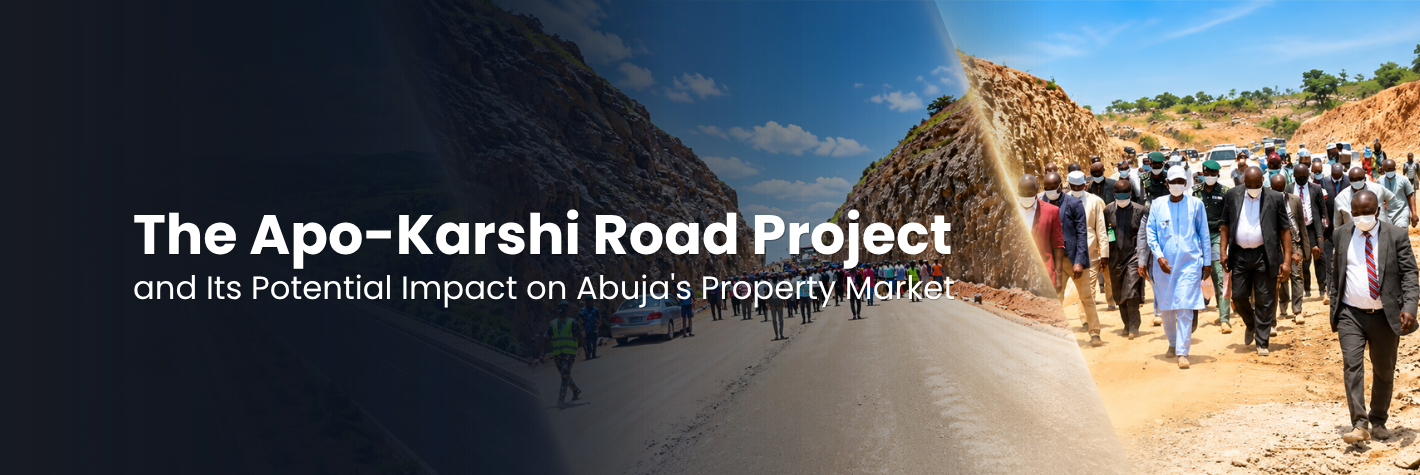

Frequently Asked Questions

What are the major Abuja projects to watch in 2026?

Major projects include the Apo–Karshi Road, Bwari–Kubwa Road, Inner Southern Expressway, Outer Southern Expressway, Arterial Road N16, Tungan Madaki–Zuba Road and Zaudna–Kagini–Kaba Road, alongside infrastructure projects across the FCT’s satellite towns. Several are targeted for completion during 2026.

Will the Apo–Karshi Road project increase property values?

Improved connectivity can increase the attractiveness of surrounding locations, but a road project alone does not guarantee property appreciation. Investors should also consider title, location, accessibility, demand, infrastructure and current pricing.

Which areas could benefit from Abuja’s infrastructure development?

Emerging and developing corridors around areas such as Apo–Karshi, Bwari, Kubwa and other satellite towns may benefit from improved infrastructure and connectivity. However, each property should be assessed individually.

Is 2026 a good time to invest in Abuja real estate?

The answer depends on the specific property, location and investment strategy. Infrastructure development can create opportunities, but buyers should conduct proper due diligence rather than investing based solely on projected growth.

Does a new road automatically make nearby land a good investment?

No. Investors should consider the property’s title, exact location, accessibility, surrounding development, demand, pricing and the actual progress of the infrastructure project.

Why is infrastructure important to Abuja real estate?

Infrastructure improves connectivity and can influence where people live, where businesses operate and where new developments emerge. This can affect demand and, over time, property values, but infrastructure is only one factor in a sound investment decision.

CategoriesUncategorized

The Apo-Karshi Road Project and Its Potential Impact on Abuja’s Property Market

What happens to property prices when a road that has been delayed for years finally gets completed?

That is one of the questions property buyers, developers and investors should be asking as the long-awaited Apo-Karshi Road project moves closer to completion.

For years, the Apo-Karshi axis has been associated with a simple problem: getting around.

The distance itself was not always the biggest issue.

It was the time it took to travel.

The road conditions.

The traffic.

The accessibility.

And the uncertainty surrounding a major infrastructure project that had remained incomplete for years.

Now, that story is changing.

The Apo-Karshi Road is being revived and construction has progressed significantly. The Federal Capital Territory Administration has stated that the approximately 13.5-kilometre road is targeted for completion and inauguration before the end of 2026.

So what could this mean for Abuja’s property market?

Could improved connectivity make the surrounding areas more attractive to homebuyers?

Could developers begin looking more closely at the corridor?

Could land prices respond to increased demand?

And perhaps most importantly:

Should you be buying property in the area simply because the road is coming?

Let’s look at what the project could actually mean.


What Is the Apo-Karshi Road Project?

The Apo-Karshi Road is a major road project designed to improve connectivity between the Apo area and Karshi, linking communities and satellite settlements along the corridor.

The project has had a long and complicated history.

It was originally awarded more than a decade ago but remained incomplete for years. The FCT Administration eventually terminated the previous contract and re-awarded the project to SCC Nigeria Limited, with work subsequently resuming.

In August 2026, FCT Minister Nyesom Wike said the road had reached an advanced stage and was expected to be completed and inaugurated around November. Earlier statements had placed the completion target around December 2026.

The important point for property buyers is not simply that a road is being constructed.

It is what improved connectivity could do to the communities connected by that road.


Why Roads Matter to Real Estate

Real estate is heavily influenced by accessibility.

You can have a beautiful house.

A large plot.

Good title documentation.

A well-planned estate.

But if getting there is consistently difficult, the property’s appeal can be limited.

This is why infrastructure and real estate tend to move together.

A better road can make it easier for:

  • Residents to commute

  • Workers to travel

  • Developers to move construction materials

  • Businesses to serve new communities

  • Emergency services to access neighbourhoods

  • Tenants to reach homes

  • Buyers to inspect properties

  • Construction projects to become more commercially viable

The FCT Administration itself identifies roads and other infrastructure as important to the development of satellite towns, including Karshi. Its satellite-town infrastructure programme includes roads, water supply, drainage, electricity, street lighting and telecommunications infrastructure.

That tells us something important:

A road is rarely just a road.

It can become the infrastructure around which further development happens.


What Could the Apo-Karshi Road Mean for Property Prices?

This is where we need to be careful.

It is tempting to say:

“The road will be completed, therefore property prices will increase.”

Real estate doesn’t work quite that simply.

A road can increase the attractiveness and accessibility of an area, which can increase demand.

But whether that demand translates into higher property values depends on several other factors.

These include:

  • Exact location

  • Land title

  • Infrastructure

  • Development activity

  • Housing demand

  • Availability of amenities

  • Transport options

  • Plot size

  • Land use

  • Quality of the property

  • Developer reputation

  • Supply of competing properties

So the better statement is:

Improved infrastructure can create conditions that support stronger property demand.

It does not guarantee that every plot along the road will appreciate.


Apo-Karshi Could Become More Accessible to Abuja’s Wider Population

One of the biggest potential effects of the project is simple:

Accessibility.

A location that feels far away because of poor roads can feel considerably closer when the journey becomes easier and more predictable.

Think about the difference between:

“It is 20 kilometres away.”

and

“I can get there in a reasonable amount of time.”

For someone buying a home, the second question is usually more important.

People don’t live in kilometres.

They live in commute times.

If the Apo-Karshi corridor becomes easier to navigate, some buyers who previously excluded the area from their property search may begin to reconsider it.

That could expand the pool of potential buyers and residents.


Developers May Begin Looking More Closely at the Corridor

Infrastructure can also influence developers.

Developers need more than available land.

They need access.

They need construction logistics.

They need buyers.

They need tenants.

And they need confidence that the surrounding area can support development.

Improved road infrastructure can make it easier to move:

  • Cement

  • Blocks

  • Steel

  • Equipment

  • Labour

  • Building materials

  • Heavy machinery

It can also make completed developments easier for buyers and tenants to access.

This could encourage more residential projects along parts of the wider Apo-Karshi corridor.

But again, development will not happen uniformly.

One location may attract significant development while another remains relatively undeveloped.

The road creates opportunity. The exact location determines how that opportunity plays out.


What About Land Prices Around Apo-Karshi?

This is probably the question most property buyers want answered.

But there is no single “Apo-Karshi land price.”

Property prices can vary significantly from one location to another.

A plot closer to an established road, developed neighbourhood or major amenity may have a very different price from a similar-sized plot farther away.

The same applies to title.

A plot with stronger documentation and clearer development status cannot automatically be compared with a cheaper property whose documentation is uncertain.

So if you are seeing advertisements saying:

“Buy now before the Apo-Karshi Road is completed!”

don’t let the urgency replace due diligence.

Ask:

Where exactly is the property?

How far is it from the completed road?

What is the access route?

What is the title?

What infrastructure already exists?

What infrastructure is actually being developed?

Those questions are more useful than simply asking whether the property is “close to Apo-Karshi Road.”


The Road Could Affect More Than Land

It is easy to think of infrastructure’s impact purely in terms of land prices.

But the effects can extend across the wider property market.

Residential Property

Improved access can make homes more attractive to people who commute to other parts of Abuja.

Rental Property

If more people begin living and working around the corridor, rental demand could increase in locations that provide convenient access.

Commercial Property

Businesses often follow population.

More residents can create demand for:

  • Shops

  • Restaurants

  • Schools

  • Clinics

  • Supermarkets

  • Pharmacies

  • Service businesses

Development Land

Developers may become more interested in larger parcels where residential or mixed-use projects can be developed.

This is how infrastructure can gradually create a property ecosystem, rather than simply increasing the value of individual plots.


But Don’t Confuse a Road With a Fully Developed Neighbourhood

This is one of the biggest mistakes property buyers can make.

A completed road is important.

But people need more than roads.

They need:

  • Electricity

  • Water

  • Drainage

  • Security

  • Schools

  • Healthcare

  • Shopping

  • Public transportation

  • Waste management

  • Telecommunications

The FCT’s own satellite-town infrastructure programme recognises this broader requirement by including water, drainage, electricity, street lighting and telecommunications alongside road construction.

So if you are considering buying around Apo-Karshi, don’t just inspect the road.

Inspect the neighbourhood.


What Could Happen to Rents?

Improved accessibility can also influence rental markets.

Imagine a location where someone previously said:

“I wouldn’t live there. The commute is too stressful.”

Now imagine that the road improves and commuting becomes easier.

That person may reconsider.

Multiply that decision across hundreds or thousands of households and you can begin to see how infrastructure can influence housing demand.

Recent reporting on Abuja’s property market has already highlighted how infrastructure improvements have contributed to rising property demand and prices in several previously underserved areas. BusinessDay reported increased property activity and price pressure in locations including parts of Karshi as infrastructure investments improved connectivity.

However, higher rents are not automatic.

Rental demand still depends on:

Who wants to live there + what they can afford + what the property offers + how accessible it actually is.


Could Apo-Karshi Become a Major Residential Corridor?

Potentially.

Karshi is already one of the FCT’s designated satellite towns, and the FCTA has infrastructure programmes specifically covering Karshi’s districts.

The wider planning approach to Abuja has also long included satellite towns as part of the strategy for accommodating population growth and reducing pressure on the central city.

This creates an important context for understanding Apo-Karshi.

The question isn’t simply:

“Is there land there?”

There is.

The more important question is:

“Can the area support sustained residential growth?”

That will depend on the combination of infrastructure, population, employment access, services and housing demand.


Who Could Benefit From Improved Apo-Karshi Connectivity?

Different property buyers could benefit in different ways.

1. Homebuyers

People looking for more affordable alternatives to highly developed Abuja districts may have more options to consider.

2. Land Buyers

Those buying land with a longer holding period may be interested in areas where infrastructure is improving.

3. Developers

Developers may find improved access more favourable for residential projects.

4. Landlords

Improved accessibility could potentially broaden the pool of people willing to rent in the area.

5. Businesses

Growing residential communities can create demand for commercial services.

But none of these outcomes should be treated as guaranteed.


Should You Buy Property Because of the Apo-Karshi Road?

Not by itself.

This is probably the most important advice in this article.

A road project can be a positive signal.

It can improve accessibility.

It can attract development.

It can increase interest in an area.

But the road should be one factor in your decision—not the entire decision.

Before buying, investigate the actual property.

Check the title.

Is the documentation genuine and verifiable?

Check the location.

Where exactly is the property?

Check the access.

Can you reach it easily from the main road?

Check the land use.

Is the property approved for your intended purpose?

Check infrastructure.

What exists today?

What is under construction?

What is simply being promised?

Check the surrounding development.

Are people already building?

Are residents already living there?

Are businesses opening?

Check the numbers.

If you are buying for investment, what is your expected return?

Don’t rely on:

“The road will make it expensive.”

Build your decision around evidence.


The Difference Between Buying Early and Buying Blind

There is a major difference between the two.

Buying early means identifying a property before an area becomes fully developed while still doing proper due diligence.

Buying blind means purchasing simply because someone tells you:

“This place will soon become the next big thing.”

The first can be a strategy.

The second is speculation.

If you are considering the Apo-Karshi corridor, don’t just ask what the area could become.

Look at what is already happening.

Are roads being constructed?

Are houses going up?

Are estates being developed?

Are people moving into the area?

Are businesses opening?

Are public facilities appearing?

Those are tangible indicators.


What Should Property Buyers Watch Between Now and 2027?

The completion of the road will not be the end of the story.

In many ways, it could be the beginning of a new phase.

Watch for:

1. Completion of the Road

The first question is whether the project meets its stated completion and commissioning timeline.

2. Secondary Roads

What happens to roads connecting surrounding communities to the main corridor?

3. Utilities

Does electricity and water infrastructure keep pace with residential development?

4. New Housing Projects

Are developers increasingly launching estates and housing projects?

5. Commercial Activity

Are businesses beginning to establish themselves around growing residential communities?

6. Population Growth

Are more people actually moving into the area?

7. Property Prices

Are prices rising because of genuine demand or simply because sellers are speculating?

That last distinction is extremely important.


Apo-Karshi Road and the Future of Abuja Real Estate

Abuja’s property market is closely connected to the expansion of the city.

As established districts become more expensive and developed, buyers naturally begin looking at areas further from the traditional centre.

Infrastructure determines how practical those areas become.

The Apo-Karshi Road therefore matters for more than transportation.

It forms part of the broader story of how Abuja expands.

If the road is completed successfully and supporting infrastructure follows, the corridor could become more integrated into Abuja’s wider residential and economic network.

But development is rarely instantaneous.

A road can be completed in months.

A neighbourhood can take years to mature.

That distinction is important for anyone buying property with a long-term view.


What Does This Mean for Property Buyers in Abuja?

The biggest lesson from the Apo-Karshi Road project is simple:

Infrastructure changes the map.

An area that previously felt inaccessible can become more connected.

A location that developers previously overlooked can become more interesting.

A neighbourhood that struggled to attract residents can become easier to live in.

And a property market that was relatively quiet can become more competitive.

But infrastructure alone doesn’t determine whether a property is worth buying.

The property, title, location, infrastructure, price and demand all have to make sense together.


Final Thoughts

The Apo-Karshi Road project is one of the infrastructure developments worth watching as Abuja continues to expand.

After years of delays, the project has been re-awarded, construction has progressed and the FCT Administration has set a 2026 completion target.

If that target is achieved, improved connectivity could make the wider corridor more attractive to residents, developers, businesses and property buyers.

But don’t make the mistake of seeing the road and immediately seeing profit.

See the road. Then look at everything around it.

Look at the infrastructure.

Look at the development.

Look at the demand.

Look at the title.

Look at the price.

Look at the actual property.

Because in real estate, a promising location is only the beginning of the conversation.


Frequently Asked Questions About the Apo-Karshi Road and Abuja Property Market

What is the Apo-Karshi Road?

The Apo-Karshi Road is a major road project in the Federal Capital Territory intended to improve connectivity between Apo, Karshi and communities along the corridor.

How long is the Apo-Karshi Road?

The project is approximately 13.5 kilometres long.

When will the Apo-Karshi Road be completed?

As of August 2026, the FCT Minister has stated that the project is targeted for completion and inauguration around November–December 2026. The exact delivery date remains subject to completion of the works.

Will the Apo-Karshi Road increase property prices?

It could contribute to increased demand and property values in some locations by improving accessibility. However, it does not guarantee price appreciation. Property values will still depend on exact location, title, infrastructure, demand and other market factors.

Is Karshi a satellite town?

Yes. Karshi is one of the satellite towns designated for development by the FCT Administration.

Should I buy land because of the Apo-Karshi Road?

The road should be considered as one factor, not the sole reason for buying. Buyers should independently verify title, location, land use, access, infrastructure, development and total acquisition cost.

What areas could benefit from the Apo-Karshi Road?

The potential impact is not limited to one neighbourhood. Communities and developments with practical access to the corridor could benefit from improved connectivity, although the extent will depend on their exact location and supporting infrastructure.

Is the Apo-Karshi area good for investment?

There is no universal answer. Investment suitability depends on the specific property, acquisition price, title, infrastructure, demand, holding period and investment objective. Buyers should assess individual properties rather than treating the entire Apo-Karshi corridor as one market.


CategoriesUncategorized

How Much Does Property Cost in Abuja? Abuja Property Prices by District

How Much Does Property Cost in Abuja? Abuja Property Prices by District

How much money do you actually need to buy property in Abuja?

It is one of the first questions almost every property buyer asks.

And unfortunately, there is no simple answer.

A plot of land in Kuje can cost a fraction of what you would pay for land in Maitama. A house in Gwarinpa can cost significantly less than a similar-sized property in Asokoro. And even within the same district, two properties can have completely different prices because of their exact location, title, infrastructure, size and condition.

So if you are searching for Abuja property prices in 2026, don’t look for one number.

Look at the market by district.

In this guide, we’ll break down property prices across some of Abuja’s major districts, explain what you can realistically expect at different budget levels, and show you what actually determines the price of a property in Abuja.


What Is the Average Property Price in Abuja?

Let’s start with the bigger picture.

According to Nigeria Property Centre’s Q3 2026 market report, the median asking price for property for sale in Abuja was ₦350 million, based on more than 13,000 listings.

But don’t let that number scare you.

It does not mean you need ₦350 million to buy property in Abuja.

The figure combines different property types across the FCT, including houses, apartments, land and commercial properties. The same report puts the median asking price at ₦300 million for land, ₦135 million for flats and ₦385 million for houses in Abuja.

That tells you something important:

“Property in Abuja” is too broad a category to price accurately.

A better question is:

What type of property are you looking for, and in which district?


Abuja Property Prices by District

The following figures provide a useful indication of current asking prices across selected Abuja districts.

DistrictIndicative Land Asking Price*Property Market Position
MaitamaPremium / often hundreds of millionsUltra-prime
AsokoroFrom roughly ₦220M median per plotPrime
GuzapeAround ₦200M median per plotPremium
KatampeAround ₦50M median per plotPremium / developing
GaladimawaAround ₦30M median per plotMid-to-upper
KarsanaAround ₦20M median per plotEmerging
ApoAround ₦10M median per plotMid-range
LugbeAround ₦15M median per plotMid-range / accessible
IduAround ₦8M median per plotEmerging / industrial-residential
KabusaAround ₦6M median per plotEmerging
KujeAround ₦3M median per plotEmerging / satellite

These are asking-price medians from listings, not official valuations or guaranteed transaction prices. The figures also cover different plot sizes, titles and property conditions, so they should be used as market indicators rather than exact quotes.

And this is where Abuja becomes interesting.

The difference between districts can be enormous.


1. Maitama Property Prices

If Abuja’s property market had a luxury tier, Maitama would be near the top of it.

Maitama is one of the capital’s most established and prestigious districts, with limited land availability and strong demand for high-end residential property.

Current listings show substantial variation, but Maitama remains firmly in the premium segment.

For apartments, Nigeria Property Centre’s August 2026 data puts the average asking price around ₦588.5 million across its tracked listings. For houses, the average was approximately ₦1.54 billion.

This is not the district to approach with a small residential-land budget.

Maitama is primarily a market for buyers looking for:

  • Prestige

  • Established infrastructure

  • Central location

  • Luxury housing

  • Diplomatic and executive residential environments

  • Long-term capital preservation

If your budget is below the premium segment, there are other Abuja districts where your money can buy significantly more land or housing.


2. Asokoro Property Prices

Asokoro is another premium Abuja district with a strong reputation for high-end residential property.

It is associated with government, diplomatic and executive activity and has relatively limited land supply compared with emerging districts.

Nigeria Property Centre’s August 2026 data places the average asking price for houses in Asokoro at approximately ₦998.9 million, although individual properties vary enormously.

For land, the Q3 2026 listing data shows a median asking price of approximately ₦220 million per plot, with listings ranging considerably above and below that figure.

Again, this demonstrates why averages should never be treated as quotations.

A property’s exact location, size, title and development potential can dramatically change the price.


3. Guzape Property Prices

Guzape sits between Abuja’s established premium districts and some of its newer luxury development corridors.

The district has attracted significant residential development and is increasingly associated with upscale apartments, terraces and detached homes.

Current Q3 2026 listing data places the median asking price for land in Guzape at around ₦200 million per plot.

For houses, Nigeria Property Centre reports a median asking price of approximately ₦700 million.

Guzape therefore sits well above the budget end of Abuja’s property market.

However, buyers should still compare properties carefully.

A high price does not automatically mean a better investment.


4. Katampe Property Prices

Katampe has become one of Abuja’s prominent premium residential districts.

It combines newer developments with relatively strong infrastructure and proximity to several established parts of the city.

Current Q3 2026 data puts the median asking price for land in Katampe at approximately ₦60 million per plot, although listings range much more widely depending on the exact location and property characteristics.

For houses, the median asking price is approximately ₦600 million.

Katampe can therefore appeal to buyers who want a premium environment but are looking beyond the traditional Maitama-Asokoro market.


5. Life Camp Property Prices

Life Camp is one of the more established residential areas in Abuja’s northern axis.

It has a mixture of apartments, houses and land, making it a relatively diverse market.

Nigeria Property Centre’s Q3 2026 data puts the median asking price for:

  • Land: ₦130 million

  • Flats: ₦90 million

  • Houses: ₦250 million

However, these figures should not be interpreted as the price of every property in Life Camp.

There are significant differences between estates, streets and property types.


6. Jahi and Jabi

Jahi and Jabi are popular with buyers who want relatively central access while still having a substantial residential market.

Jahi’s Q3 2026 median asking price across tracked property listings was around ₦380 million, while the district also contains different property categories with substantially different price points.

Jabi is particularly attractive because of its location, commercial activity and established residential environment.

For apartments, current market estimates place Jabi among Abuja’s more expensive apartment locations, alongside districts such as Maitama, Asokoro, Wuse 2 and Guzape.


7. Gwarinpa Property Prices

If you’re looking for a more accessible entry point into established residential Abuja, Gwarinpa is one of the districts worth considering.

It is a large residential area with strong family-driven demand and a substantial supply of houses, apartments and land.

Current market estimates place typical house prices in Gwarinpa considerably below premium districts such as Maitama and Asokoro, although prices vary depending on property type and location.

The appeal of Gwarinpa is not simply price.

It is also about livability.

There are established residential communities, businesses, schools, shops and other services.

For many families, that balance can matter more than having a prestigious address.


8. Lokogoma Property Prices

Lokogoma is another district that frequently appears on searches from Abuja property buyers.

Nigeria Property Centre’s August 2026 demand data ranked Lokogoma third among Abuja localities by share of property searches, accounting for 4.8% of searches.

Current market estimates place typical residential property prices below the premium districts, although the range is broad because Lokogoma contains different types of estates and developments.

This is an important point:

Demand doesn’t always mean premium pricing.

A district can attract a lot of buyers precisely because it offers a more accessible price point.


9. Lugbe Property Prices

Lugbe is one of the districts worth watching if your budget is below the premium Abuja market.

It is particularly relevant to buyers interested in the airport corridor and locations with relatively accessible entry prices.

Nigeria Property Centre’s Q3 2026 data puts the median asking price for land in Lugbe at approximately ₦18 million per plot.

The same dataset puts median asking prices at approximately:

  • ₦90 million for flats

  • ₦120 million for houses

  • ₦90 million across the broader property category

Lugbe also had the highest share of property searches in Abuja in August 2026 at 9.3%, ahead of Gwarinpa and Lokogoma.

That makes it an important market to watch for buyers looking for a combination of accessibility, residential demand and comparatively lower entry prices.


10. Apo Property Prices

Apo is another important residential and investment corridor.

The district has experienced considerable development and contains a mixture of established neighbourhoods and newer developments.

Current Q3 2026 data puts the median asking price for land in Apo at approximately ₦19 million per plot, although individual listings range from much lower to several hundred million naira.

This wide range is a reminder that “Apo” alone is not enough information to determine a property’s value.

The exact part of Apo matters.

The estate matters.

The title matters.

The infrastructure matters.

And the plot size matters.


11. Karsana Property Prices

Karsana is one of the emerging residential corridors attracting increasing attention from Abuja property buyers.

Current Q3 2026 listing data places the median asking price for land in Karsana at approximately ₦32.5 million per plot, with listings ranging significantly depending on the exact property.

This is a useful example of how emerging areas can sit between affordable and premium markets.

You may find properties that are significantly cheaper than central Abuja while still benefiting from ongoing residential development.

But, as always, buyers need to examine the exact property rather than simply buying because a district is described as “up-and-coming.”


12. Kabusa and Ketti-Kabusa

Kabusa and the wider Ketti-Kabusa corridor are particularly relevant to buyers looking for lower entry points into Abuja’s expanding property market.

Current Q3 2026 data places the median asking price for land in Kabusa at approximately ₦11.7 million per plot, with listings ranging from ₦3.4 million to ₦48 million in the dataset.

But Ketti-Kabusa is not one uniform property market.

Prices vary depending on:

  • Exact location

  • Estate

  • Plot size

  • Documentation

  • Infrastructure

  • Road access

  • Development around the property

For example, buyers considering Ketti-Kabusa should look at the exact estate rather than simply searching for the cheapest plot carrying the Ketti-Kabusa name.


13. Kuje Property Prices

Kuje is one of the more accessible locations for buyers with smaller land budgets.

Q3 2026 listing data places the median asking price for land in Kuje at approximately ₦6 million per plot, with listed prices ranging from about ₦2 million to ₦30 million.

Kuje’s lower entry price does not automatically make every property there a bargain.

The same rules still apply:

Title.

Location.

Infrastructure.

Access.

Development.

Demand.

These factors determine whether a particular property makes sense.


What Can You Buy in Abuja With ₦10 Million?

This is where things become more practical.

If you have around ₦10 million, you are unlikely to be shopping for land in Maitama or Asokoro.

But you may have options in emerging locations such as Kuje, Ketti-Kabusa and parts of the wider Abuja outskirts.

And this is where it is important to look beyond general market averages.

For example, Neo Peninsula Estate by NeoHomes, located in Ketti-Kabusa, currently starts from ₦5,625,000.

That means a buyer with a budget around ₦10 million can potentially explore a structured estate option within this price bracket, subject to available plot sizes, current pricing and applicable fees.

The lesson is simple:

You don’t necessarily need tens or hundreds of millions to start your property journey in Abuja.

You need to find the right location and the right property for your budget.

Of course, don’t spend your entire budget based on the advertised land price alone. Find out about documentation, infrastructure, development fees and other applicable costs before making a commitment.


What Can You Buy With ₦20 Million?

A ₦20 million budget opens up considerably more possibilities.

You can begin looking at:

  • Better-positioned land in emerging districts

  • Smaller plots in some established corridors

  • Estate developments

  • Some locations around Lugbe

  • Apo

  • Kabusa/Ketti

  • Parts of Kuje

  • Other developing Abuja corridors

Current listing medians place Lugbe land around ₦18 million and Apo around ₦19 million per plot.

Again, these are asking-price indicators, not guarantees.

If you are looking beyond land, your options can also include smaller apartments or other property types depending on the district and current market.


What Can You Buy With ₦25 Million to ₦50 Million?

This is where the range of options becomes even more interesting.

A budget between ₦25 million and ₦50 million can give buyers access to several emerging and mid-range property markets in Abuja, depending on the property type and exact location.

For buyers interested in apartments, Bella Vista Apartments by NeoHomes in Kyami is one option to consider, with prices starting from ₦25 million for a 1-bedroom apartment.

The development also offers 2-bedroom apartments starting from ₦35 million.

Bella Vista is located in Kyami, with proximity to the airport, making it an option for buyers looking for a completed residential property rather than simply buying land.

This is an important distinction.

At this budget, you should not only ask:

“Where can I buy land?”

You should also ask:

“Do I want land, or would a completed property make more sense for me?”

Your answer will depend on whether you want to build later, hold land, live in the property or potentially generate rental income.


What Can You Buy With ₦50 Million?

At around ₦50 million, the Abuja market becomes much broader.

Depending on your priorities, you could explore:

  • Premium land in emerging districts

  • Better-positioned properties in mid-range districts

  • Larger plots

  • Residential development opportunities

  • Apartments

  • Completed residential properties

  • Properties in districts such as Katampe, depending on size and exact location

Katampe’s current median land asking price is around ₦60 million per plot, while Karsana’s is around ₦32.5 million.

You can also consider completed residential options such as Bella Vista Apartments in Kyami, where NeoHomes currently offers 1-bedroom apartments from ₦25 million and 2-bedroom apartments from ₦35 million.

So a ₦50 million budget doesn’t necessarily mean you have to choose between only raw land and luxury property.

There is a middle ground.


What Can You Buy With ₦100 Million?

At ₦100 million and above, you can begin considering a much wider range of established Abuja property.

Depending on the district, this could include:

  • Apartments

  • Terraces

  • Smaller detached houses

  • Premium land

  • Development land

  • Investment properties

But even ₦100 million does not automatically put every Abuja district within reach.

Maitama, Asokoro and some parts of Guzape can operate at substantially higher price levels.

This is where your objective becomes more important than your budget alone.


Why Are Abuja Property Prices So Different?

If two plots are both 500sqm, why can one cost ₦20 million while another costs hundreds of millions?

Because the land itself is only one part of the value equation.

1. Location

The closer a property is to established commercial, government and residential centres, the more the market may be willing to pay.

2. Infrastructure

Good roads, drainage, electricity, water and other services increase usability.

3. Title

Documentation matters enormously.

A property with clear, verifiable documentation can command a premium over one with uncertain ownership or title.

4. Demand

Popular districts tend to attract more buyers and tenants.

5. Plot Size

A 150sqm plot and a 500sqm plot should never be compared simply because they are both described as “a plot.”

6. Land Use

Residential, commercial and mixed-use properties have different development potential.

7. Estate Development

A developed estate with roads, security and infrastructure may cost more than raw land.

8. Developer Reputation

Buyers often pay a premium for developers with a credible track record and transparent documentation.


Asking Price Is Not the Same as Market Value

This distinction is extremely important.

Most publicly available online property data consists of asking prices.

That means the seller or agent is saying:

“This is the price I want.”

It does not necessarily mean:

“This is the exact price at which the property will sell.”

Nigeria Property Centre explicitly describes its Q3 2026 figures as property asking prices, and its land data is based on advertised prices per plot.

So when you see:

“Land in Abuja is ₦50 million.”

Ask:

Which district?

What plot size?

What title?

What infrastructure?

What exact location?

Is ₦50 million the asking price or the final transaction price?

That distinction can save you from making poor comparisons.


Don’t Compare Abuja Property by District Name Alone

This is another common mistake.

Someone says:

“I found a property in Apo for ₦15 million.”

Someone else says:

“I found another Apo property for ₦60 million.”

Which one is cheaper?

You cannot know without more information.

You need to compare:

  • Plot size

  • Exact location

  • Title

  • Road access

  • Infrastructure

  • Development level

  • Land use

  • Estate facilities

  • Payment terms

  • Additional fees

The same principle applies everywhere in Abuja.

District is the starting point, not the entire valuation.


What About Cheap Land in Abuja?

Yes, relatively cheap land exists.

But cheap land requires more questions, not fewer.

If someone offers you land far below the prevailing price for an area, ask:

Why is it cheaper?

Is it:

  • Farther from the main road?

  • Smaller?

  • Unserviced?

  • Under a different land-use classification?

  • Subject to additional development costs?

  • Located in an emerging area?

  • Missing documentation?

  • Difficult to access?

Sometimes a low price represents genuine opportunity.

Sometimes it represents a problem.

You need to know which one you are looking at.


How Much Should You Budget Beyond the Property Price?

One of the easiest ways to underestimate the cost of buying property in Abuja is to budget only for the advertised price.

Depending on the transaction, you may also encounter:

  • Documentation fees

  • Legal fees

  • Survey fees

  • Agency fees

  • Development fees

  • Infrastructure fees

  • Registration-related costs

  • Ground rent or other applicable charges

  • Construction costs if you are buying land to build

The exact charges depend on the property and transaction.

So if your budget is ₦20 million, don’t automatically search for a ₦20 million property.

You may need to leave room for the costs that come after the purchase price.


Which Abuja District Is Best for Your Budget?

There is no universal “best district.”

There is only the district that makes the most sense for your budget and objective.

If You Have a Smaller Land Budget

Consider emerging areas such as:

  • Kuje

  • Kabusa/Ketti

  • Parts of the wider outskirts

For buyers working with a budget below ₦10 million, Neo Peninsula Estate in Ketti-Kabusa, where prices currently start from ₦5,625,000, is one property option worth exploring.

If You Have a Mid-Range Budget

You may explore:

  • Lugbe

  • Apo

  • Karsana

  • Galadimawa

  • Idu

  • Gwarinpa and surrounding areas

You can also look beyond land.

For example, buyers with ₦25 million to ₦50 million can consider completed residential options such as Bella Vista Apartments in Kyami, with 1-bedroom apartments starting from ₦25 million and 2-bedroom apartments from ₦35 million.

If You Have a Higher Budget

You can begin considering:

  • Katampe

  • Life Camp

  • Jabi

  • Guzape

  • Premium parts of other established districts

If Budget Is Not the Main Constraint

Then districts such as:

  • Maitama

  • Asokoro

  • Wuse 2

  • Premium parts of Guzape

may enter the conversation.

But even then, price should not be the only consideration.


Where Is Abuja Property Demand Highest?

Price and demand are not the same thing.

Nigeria Property Centre’s August 2026 search data shows that Lugbe District accounted for 9.3% of property searches in Abuja, followed by Gwarinpa at 7.1% and Lokogoma at 4.8%. Maitama accounted for 4.5%, while Asokoro accounted for 4.2%.

This is useful because it shows where people are actively searching.

But search demand should not be confused with completed sales.

Someone searching for property has not necessarily bought property.

Still, it gives buyers and developers another way to think about the market.


Is Expensive Property Always a Better Investment?

No.

This is one of the biggest misconceptions in real estate.

A ₦200 million property is not automatically a better investment than a ₦20 million property.

Investment performance depends on:

  • Purchase price

  • Rental demand

  • Capital appreciation

  • Holding period

  • Development potential

  • Liquidity

  • Acquisition costs

  • Financing costs

  • Risk

A cheaper property in a growing area can potentially outperform an expensive property in a saturated market.

Likewise, a premium property can offer advantages that a cheaper property cannot.

Price and value are not the same thing.


What Should You Check Before Buying Property in Abuja?

Before paying for any property, verify the fundamentals.

Check the title.

What document covers the property?

Can it be independently verified?

Check ownership.

Who legally owns the property?

Check the survey.

Do the coordinates correspond with the actual land?

Check land use.

Is the property approved for what you intend to do with it?

Check accessibility.

Can you actually reach the property easily?

Check infrastructure.

What exists today?

What is under construction?

What has merely been promised?

Check additional costs.

What will the property actually cost you after all fees?

Visit the property.

Never make a major property decision based solely on pictures, maps or a WhatsApp conversation.


The Bottom Line: How Much Does Property Cost in Abuja?

The honest answer is:

It depends.

In 2026, you can find Abuja property markets where land is advertised around the single-digit millions per plot, while premium districts command hundreds of millions for land alone.

Current Q3 2026 listing data illustrates the spread clearly: the median asking price per plot was approximately ₦6 million in Kuje, ₦11.7 million in Kabusa, ₦18 million in Lugbe, ₦19 million in Apo, ₦32.5 million in Karsana, ₦60 million in Katampe, ₦200 million in Guzape and ₦220 million in Asokoro.

But those numbers are only the beginning.

The real question isn’t:

“How much does property cost in Abuja?”

It is:

“How much does the right property for me cost in Abuja?”

That depends on your budget.

Your purpose.

Your preferred district.

The property type.

The title.

The infrastructure.

And your long-term plan.

And the good news is that you don’t have to be shopping in the hundreds of millions to find property options in Abuja.

For buyers with a smaller budget, Neo Peninsula Estate by NeoHomes in Ketti-Kabusa starts from ₦5,625,000.

For buyers looking for a completed residential property in a higher budget bracket, Bella Vista Apartments by NeoHomes in Kyami starts from ₦25 million for a 1-bedroom apartment and ₦35 million for a 2-bedroom apartment.

Different budgets. Different property types. Different locations.

The important thing is finding the option that fits your objective, your budget and your long-term plan.

Because the cheapest property isn’t necessarily the best deal.

And the most expensive property isn’t necessarily the best investment.

The best property is the one whose price, location, documentation, quality and purpose make sense together.


Frequently Asked Questions About Abuja Property Prices

How much does land cost in Abuja in 2026?

Land prices vary significantly by district. Current Q3 2026 asking-price data ranges from around ₦6 million per plot in Kuje to approximately ₦220 million in Asokoro, with many districts falling between those extremes.

What is the cheapest area to buy land in Abuja?

Among the major Abuja locations tracked in current Q3 2026 listing data, Kuje has a median asking price of approximately ₦6 million per plot. Other emerging areas can also offer relatively lower entry prices.

How much is land in Kuje?

The median asking price for land in Kuje was approximately ₦6 million per plot in Nigeria Property Centre’s Q3 2026 data, with listed prices ranging from around ₦2 million to ₦30 million.

How much is land in Lugbe?

The Q3 2026 median asking price for land in Lugbe District was approximately ₦18 million per plot.

How much is land in Apo?

Current Q3 2026 listing data puts the median asking price for land in Apo at approximately ₦19 million per plot.

How much is land in Karsana?

The median asking price for land in Karsana was approximately ₦32.5 million per plot in Q3 2026.

How much is land in Maitama?

Maitama is one of Abuja’s most expensive property markets. Prices vary significantly by exact location, plot size and title, and premium land can cost hundreds of millions of naira.

Is Abuja property expensive?

Compared with many Nigerian property markets, Abuja has a relatively high property market, particularly in established premium districts. However, the city has a wide range of property markets, meaning buyers can find significantly lower entry points in emerging districts.

Can I buy property in Abuja with ₦10 million?

Yes. Your options will generally be concentrated in emerging areas and smaller or less-developed property markets rather than premium districts. For example, Neo Peninsula Estate in Ketti-Kabusa by NeoHomes currently starts from ₦5,625,000, subject to available plot sizes and current terms.

What property can I buy with ₦25 million in Abuja?

Your options can include land in several emerging or mid-range districts, depending on size and location. You can also consider completed residential property. Bella Vista Apartments in Kyami by NeoHomes currently starts from ₦25 million for a 1-bedroom apartment.

What property can I buy with ₦35 million in Abuja?

A budget of ₦35 million gives you access to more land options across emerging districts and can also put certain completed residential properties within reach. Bella Vista Apartments in Kyami offers 2-bedroom apartments starting from ₦35 million.

Is it better to buy land or a house in Abuja?

It depends on your objective. Land may suit buyers planning to build later or hold for the long term, while a completed house or apartment may be more appropriate for someone who wants immediate occupancy or rental income.

Are Abuja property prices negotiable?

Many advertised property prices are asking prices, so negotiation may be possible. However, the amount of negotiation depends on the seller, property, market conditions and how urgently the seller wants to transact.

What is the most important thing to check before buying property in Abuja?

Don’t focus only on price. Verify the title, ownership, survey, land use, location, accessibility, infrastructure and total acquisition cost before making payment.