
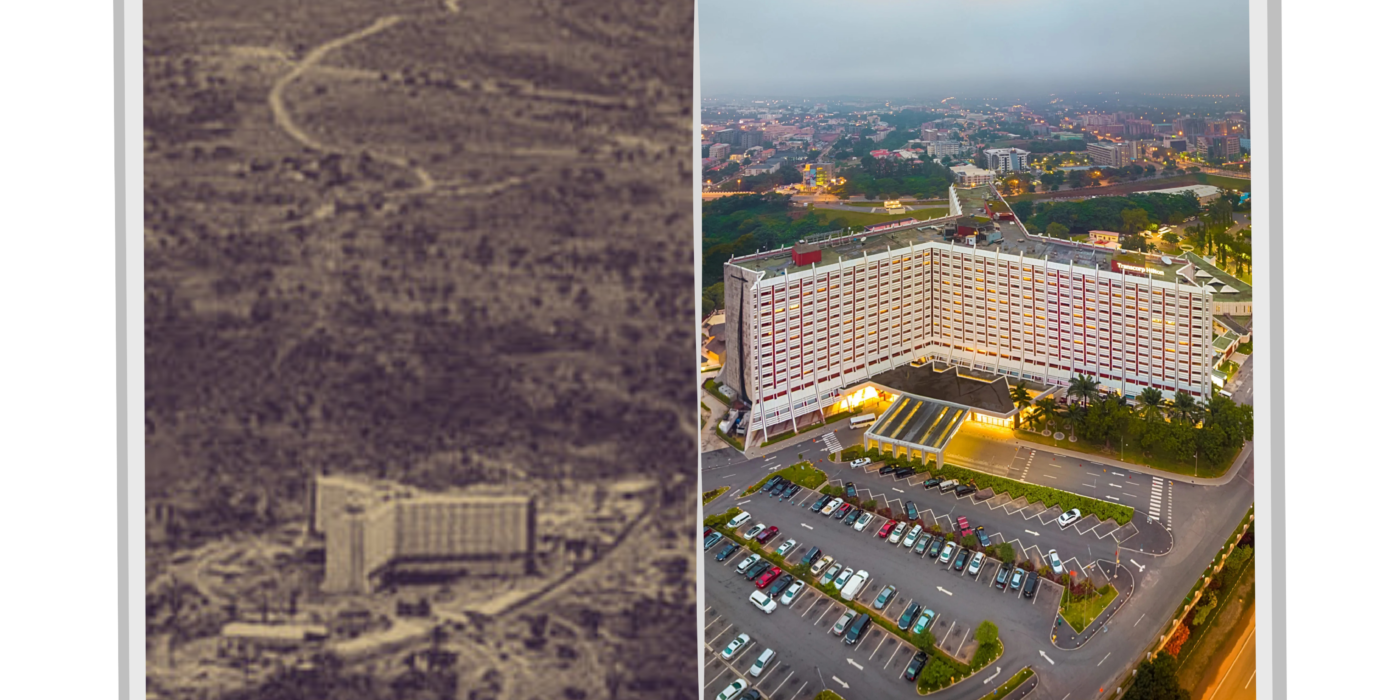
If you’ve lived in Abuja long enough, you’ve probably said it before:
“I remember when this place was just bush.”
Today, many of those same places are among Nigeria’s most valuable residential and commercial districts.
Abuja Was Designed to Grow
Every completed building is evidence that someone recognized an opportunity long before everyone else did.
Unlike many major African cities that expanded organically, Abuja was intentionally planned.
Following the creation of the Federal Capital Territory (FCT) in 1976, Nigeria began developing Abuja as its new capital under a comprehensive Master Plan. The city officially became the nation’s capital in 1991.
Rather than growing randomly, Abuja was structured to develop in phases, with infrastructure extending into new districts as demand increased.
This deliberate planning remains one of the reasons Abuja continues to attract residents, investors, businesses, and government institutions.
Understanding Abuja’s Development Phases
The Federal Capital City is divided into multiple development phases comprising residential districts, commercial centres, industrial areas, institutional zones, parks, and transportation corridors.
Each phase represents the city’s planned outward expansion.
As infrastructure reaches new districts, development naturally follows.
Phase 1 — The Foundation of Modern Abuja
Many of Abuja’s most prestigious addresses are located within the earliest phase of development.
These include:
- Central Area
- Maitama
- Asokoro
- Wuse
- Garki
- Guzape
Today, these districts command premium land prices and host government institutions, embassies, multinational companies, and luxury residential developments.
But several decades ago, many of these same locations were still developing.
The investors who acquired land before widespread development witnessed significant long-term appreciation.
The City’s Expansion
As Abuja’s population increased, the city expanded beyond its earliest districts.
Road networks, bridges, water infrastructure, electricity, schools, hospitals, commercial centres, and private developments gradually extended into surrounding areas.
Rather than creating entirely new cities, each stage represented another chapter in Abuja’s long-term Master Plan.
This pattern continues today.
Emerging Growth Corridors
Several developing districts now attract increasing attention from both private developers and homebuyers.
Among them are:
- Karsana
- Ketti
- Idu
- Kagini
- Gwagwa
- Waru
- Jaite
- Apo (including its expanding outskirts)
- Kyami
Many of these areas are benefiting from expanding infrastructure, residential estates, improved road connectivity, and increasing private-sector investment.
Just as earlier generations watched Maitama and Guzape evolve, today’s emerging districts are gradually transitioning from undeveloped land into thriving communities.
Infrastructure Creates Value
Buildings alone don’t transform a city.
Infrastructure does.
Roads improve accessibility.
Water systems support communities.
Electricity enables businesses.
Public transport connects people.
Schools, hospitals, and commercial centres attract long-term residents.
Over the years, Abuja has continued investing in:
- Major expressways
- Ring roads
- Rail connectivity
- Water infrastructure
- Electricity networks
- Telecommunications
- Public institutions
- Housing developments
Each new infrastructure project increases accessibility—and accessibility is one of the strongest drivers of property value.
Abuja’s Population Continues to Grow
Although Nigeria’s most recent national population census was conducted in 2006, Abuja has consistently ranked among the country’s fastest-growing urban centres.
Every year, thousands of Nigerians relocate to the capital for:
- Employment
- Government services
- Business opportunities
- Education
- Security
- Better quality of life
This continued migration fuels demand for housing, commercial property, and supporting infrastructure.
As demand rises, development naturally expands into newer districts.
Why Districts Like Apo, Karsana, Ketti, Kyami, Idu, and Waru Matter
History rarely repeats itself exactly.
But it often follows familiar patterns.
There was a time when:
- Maitama was largely undeveloped.
- Asokoro had very little construction.
- Guzape was still emerging.
Today, those districts represent some of Abuja’s most desirable locations.
The same long-term forces—population growth, infrastructure investment, and urban expansion—are shaping today’s emerging districts.
While no investment is guaranteed to appreciate, locations experiencing planned infrastructure growth often attract increasing residential and commercial interest over time.
For investors with a long-term perspective, understanding where a city is expanding can be just as important as understanding where it has already matured.
Buildings Are Signs You’re Late
Every skyline tells the same story.
Someone bought before the roads.
Someone invested before the headlines.
Someone believed before the buildings appeared.
Today, people admire Maitama.
Yesterday, it was simply open land with potential.
Tomorrow, people may look at places like Karsana, Ketti, Kyami, Idu, Waru, and Apo in much the same way.
Because in every growing city, buildings don’t create the opportunity.
They reveal that the opportunity has already begun.

3 Comments
This is exactly what i was looking for, thank you so much for these tutorials
It would be great to try this theme for my businesses
What a nice article. It keeps me reading more and more!