Categoriestips & tricks

Neohomes Sponsors MC Monica Comedy Show, Reinforcing Support for Abuja’s Creative Industry and Community Development

Neohomes has once again demonstrated its commitment to building stronger communities by sponsoring the MC Monica “Can I Say Something?” Comedy Show, one of Abuja’s vibrant entertainment events that brought together creatives, professionals, entrepreneurs and residents for an evening of comedy, music and spoken word.

While Neohomes is widely recognized for delivering quality real estate investment opportunities and housing developments across Abuja, the company believes that creating sustainable communities goes beyond constructing estates. It also means supporting initiatives that inspire people, encourage collaboration and promote cultural expression.

Why Neohomes Sponsored the MC Monica Comedy Show

The partnership reflects Neohomes’ long-term vision of contributing to the social and economic growth of Abuja through meaningful community engagement.

As one of the event’s headline sponsors, Neohomes connected with hundreds of attendees, sharing information about its ongoing residential developments, land investment opportunities and its mission to make property ownership more accessible for individuals and families.

According to the company:

“At Neohomes, we believe that building communities goes beyond developing houses and estates. It is about supporting platforms that bring people together, celebrate creativity and create meaningful connections. Our partnership with the MC Monica show aligns with our commitment to investing in both people and communities.”

A Celebration of Creativity in Abuja

The MC Monica “Can I Say Something?” Comedy Show attracted comedians, musicians, spoken word artists, entertainers, business leaders and residents from across Abuja.

One of the evening’s standout moments was the captivating spoken word performance by Deborah Johnson, popularly known as The Global Poet. Her inspiring presentation resonated with the audience and reinforced the event’s message of hope, creativity and community.

Throughout the event, guests also visited the Neohomes exhibition stand to learn more about the company’s real estate projects, flexible investment opportunities and future developments across Abuja.

Real Estate Meets Community Development

Modern real estate extends beyond buildings. Strong communities are created when businesses invest in people, culture and shared experiences.

By supporting events like the MC Monica Comedy Show, Neohomes continues to demonstrate that successful property development includes encouraging creativity, supporting local talent and fostering meaningful relationships within the communities it serves.

Corporate partnerships with entertainment and cultural events also contribute to economic growth by creating opportunities for artists, entrepreneurs, vendors and emerging talents throughout Abuja.

Neohomes’ Vision for Abuja

As Neohomes continues expanding its footprint across Abuja, the company remains focused on delivering innovative housing developments, secure land investment opportunities and community-centered projects that improve lives.

Beyond real estate, Neohomes is committed to supporting initiatives that educate, inspire and entertain while helping to build vibrant communities where people can live, work and thrive.

Whether through strategic partnerships, community engagement or quality property developments, Neohomes continues to position itself as a trusted real estate company dedicated to shaping the future of Abuja.

Conclusion

The sponsorship of the MC Monica “Can I Say Something?” Comedy Show reflects Neohomes’ belief that thriving communities are built through collaboration, creativity and meaningful investment in people.

As Abuja continues to grow, Neohomes remains committed to creating lasting value, not only through exceptional real estate developments but also by supporting initiatives that strengthen culture, empower local talent and bring communities together.

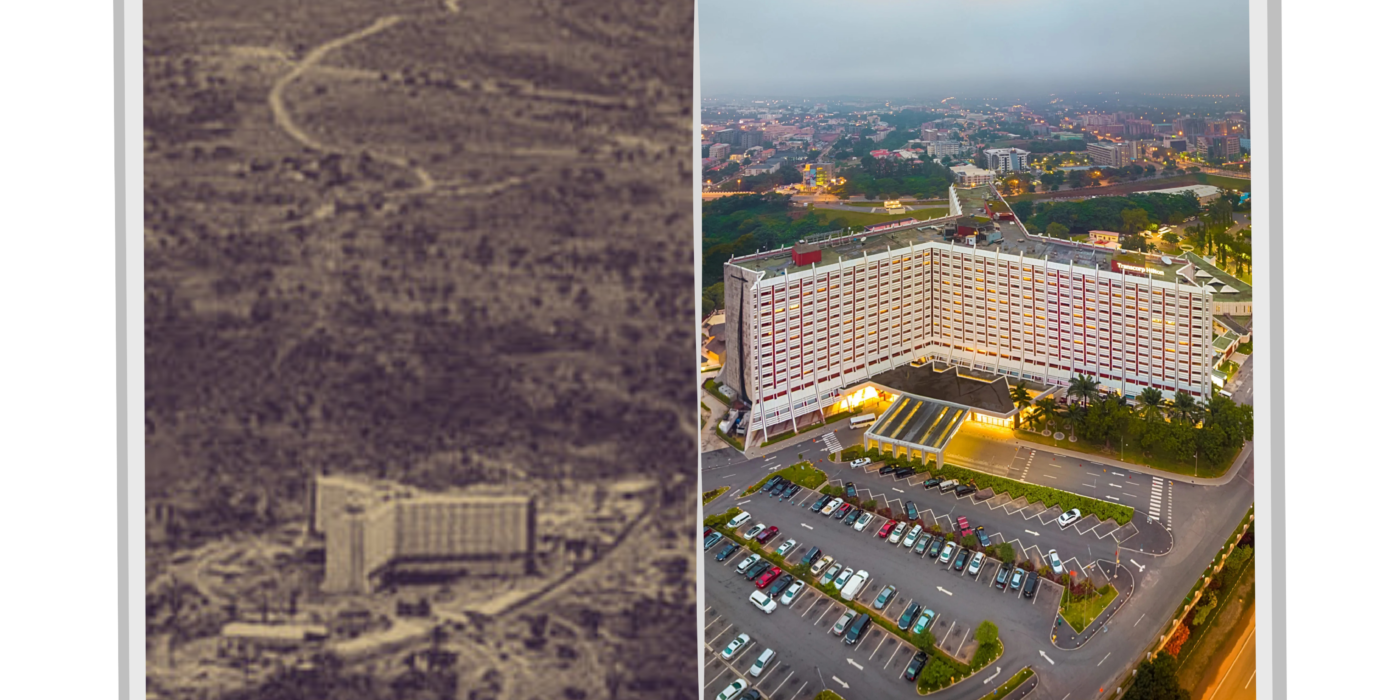
Abuja skyline showing the growth of real estate investment opportunities
Categoriestips & tricks

Buildings Are Signs You’re Late | Abuja Real Estate Investment Guide

If you’ve lived in Abuja long enough, you’ve probably said it before:

“I remember when this place was just bush.”

Today, many of those same places are among Nigeria’s most valuable residential and commercial districts.


Abuja Was Designed to Grow

Every completed building is evidence that someone recognized an opportunity long before everyone else did.

Unlike many major African cities that expanded organically, Abuja was intentionally planned.

Following the creation of the Federal Capital Territory (FCT) in 1976, Nigeria began developing Abuja as its new capital under a comprehensive Master Plan. The city officially became the nation’s capital in 1991.

Rather than growing randomly, Abuja was structured to develop in phases, with infrastructure extending into new districts as demand increased.

This deliberate planning remains one of the reasons Abuja continues to attract residents, investors, businesses, and government institutions.

Understanding Abuja’s Development Phases

The Federal Capital City is divided into multiple development phases comprising residential districts, commercial centres, industrial areas, institutional zones, parks, and transportation corridors.

Each phase represents the city’s planned outward expansion.

As infrastructure reaches new districts, development naturally follows.


Phase 1 — The Foundation of Modern Abuja

Many of Abuja’s most prestigious addresses are located within the earliest phase of development.

These include:

  • Central Area
  • Maitama
  • Asokoro
  • Wuse
  • Garki
  • Guzape

Today, these districts command premium land prices and host government institutions, embassies, multinational companies, and luxury residential developments.

But several decades ago, many of these same locations were still developing.

The investors who acquired land before widespread development witnessed significant long-term appreciation.


The City’s Expansion

As Abuja’s population increased, the city expanded beyond its earliest districts.

Road networks, bridges, water infrastructure, electricity, schools, hospitals, commercial centres, and private developments gradually extended into surrounding areas.

Rather than creating entirely new cities, each stage represented another chapter in Abuja’s long-term Master Plan.

This pattern continues today.


Emerging Growth Corridors

Several developing districts now attract increasing attention from both private developers and homebuyers.

Among them are:

  • Karsana
  • Ketti
  • Idu
  • Kagini
  • Gwagwa
  • Waru
  • Jaite
  • Apo (including its expanding outskirts)
  • Kyami

Many of these areas are benefiting from expanding infrastructure, residential estates, improved road connectivity, and increasing private-sector investment.

Just as earlier generations watched Maitama and Guzape evolve, today’s emerging districts are gradually transitioning from undeveloped land into thriving communities.


Infrastructure Creates Value

Buildings alone don’t transform a city.

Infrastructure does.

Roads improve accessibility.

Water systems support communities.

Electricity enables businesses.

Public transport connects people.

Schools, hospitals, and commercial centres attract long-term residents.

Over the years, Abuja has continued investing in:

  • Major expressways
  • Ring roads
  • Rail connectivity
  • Water infrastructure
  • Electricity networks
  • Telecommunications
  • Public institutions
  • Housing developments

Each new infrastructure project increases accessibility—and accessibility is one of the strongest drivers of property value.


Abuja’s Population Continues to Grow

Although Nigeria’s most recent national population census was conducted in 2006, Abuja has consistently ranked among the country’s fastest-growing urban centres.

Every year, thousands of Nigerians relocate to the capital for:

  • Employment
  • Government services
  • Business opportunities
  • Education
  • Security
  • Better quality of life

This continued migration fuels demand for housing, commercial property, and supporting infrastructure.

As demand rises, development naturally expands into newer districts.


Why Districts Like Apo, Karsana, Ketti, Kyami, Idu, and Waru Matter

History rarely repeats itself exactly.

But it often follows familiar patterns.

There was a time when:

  • Maitama was largely undeveloped.
  • Asokoro had very little construction.
  • Guzape was still emerging.

Today, those districts represent some of Abuja’s most desirable locations.

The same long-term forces—population growth, infrastructure investment, and urban expansion—are shaping today’s emerging districts.

While no investment is guaranteed to appreciate, locations experiencing planned infrastructure growth often attract increasing residential and commercial interest over time.

For investors with a long-term perspective, understanding where a city is expanding can be just as important as understanding where it has already matured.

Buildings Are Signs You’re Late

Every skyline tells the same story.

Someone bought before the roads.

Someone invested before the headlines.

Someone believed before the buildings appeared.

Today, people admire Maitama.

Yesterday, it was simply open land with potential.

Tomorrow, people may look at places like Karsana, Ketti, Kyami, Idu, Waru, and Apo in much the same way.

Because in every growing city, buildings don’t create the opportunity.

They reveal that the opportunity has already begun.

The Next Opportunity Is Being Built Today
 
Every great investment story starts before the skyline changes.
 
The question isn’t whether Abuja will continue to grow—it already is. The real question is whether you’ll be part of the next chapter or wait until the buildings have already told the story.
 
At Neo Homes, we’re developing communities in some of Abuja’s fastest-growing districts, including Ketti, Karsana, Kyami, Apo  and Idu—locations positioned within the city’s long-term expansion plans.
 
Whether you’re buying your first plot, building a family legacy, or investing for future returns, the best time to understand tomorrow’s opportunities is before everyone else does.
 
Don’t wait for the buildings to convince you. By then, they’ll simply be signs that you’re late.
 
Explore our available developments today or speak with one of our property advisors to discover where Abuja is growing next.
 
 
Categoriestips & tricks Uncategorized

Maitama vs Asokoro vs Apo/Wasa: Where to Invest in Abuja Real Estate

Same City, Different Entry Point: Maitama, Asokoro & Apo/Wasa Compared

Abuja is one city, but the cost of entering its real estate market can change dramatically depending on where you invest.

If you wanted landed property in Maitama, you could be looking at prices around ₦2 million per square metre — roughly ₦185,800 per square foot. In Asokoro, prices can sit closer to ₦700,000 per square metre, or approximately ₦65,000–₦70,000 per square foot.

Move further towards Apo/Wasa, however, and land can be available within the region of ₦37,000–₦45,000 per square metre, depending on the property, title, location and development.

Same Abuja. Completely different entry points.

For investors looking for land for sale in Abuja, understanding why this pricing gap exists is more important than simply comparing the numbers.

.

 

Why Invest in Abuja Real Estate?

Abuja has a structural advantage that distinguishes its property market from many other Nigerian cities: land administration within the Federal Capital Territory is centrally regulated.

Land documentation and allocation are overseen through FCT institutions, while Abuja Geographic Information Systems (AGIS) plays an important role in land records and title verification.

For investors, this makes proper due diligence critical — but also provides a formal framework through which land ownership claims can be investigated before purchase.

Abuja also benefits from a distinctive demand base.

As Nigeria’s capital, the city accommodates federal government institutions, embassies, diplomatic missions, international organisations, businesses and a growing professional population.

This creates demand for residential and commercial property that extends beyond short-term speculation.

The question, therefore, isn’t simply whether Abuja has investment potential.

It is where in Abuja you enter the market — and at what stage of development.

Maitama & Asokoro: Abuja’s Established Core

Maitama and Asokoro represent some of Abuja’s most established and prestigious districts.

They benefit from mature road networks, developed infrastructure and decades of diplomatic, governmental and high-income residential activity.

For property investors, that maturity provides an obvious advantage: much of the infrastructure required to support premium property values is already in place.

But there is a trade-off.

You are paying for that maturity.

Land prices in Maitama and Asokoro already reflect their infrastructure, scarcity, prestige and established demand. This makes both districts attractive for wealth preservation and premium property ownership, but creates a significantly higher barrier to entry.

For an investor seeking an earlier-stage opportunity, the economics are different.

That brings us to Apo/Wasa.

Apo/Wasa: Abuja’s Emerging Investment Corridor

Apo/Wasa represents a different stage in Abuja’s development cycle.

Rather than buying into a district where infrastructure and premium pricing are already firmly established, investors are entering a corridor that is still being built out.

Historically, early land within parts of the area could be acquired for only a few million naira per plot. Today, entry-level estate plots can command substantially higher prices, while larger residential and commercial plots are priced at further premiums.

The important question is:

What is driving the change?

Increasing attention around Apo Wasa real estate investment is closely tied to infrastructure development and improved connectivity within Abuja’s southern corridor.

1. Outer Southern Expressway (OSEX)

The Outer Southern Expressway (OSEX) is one of the major transport corridors influencing development around this axis.

As road infrastructure expands and previously less-accessible districts become better connected to established parts of Abuja, the investment proposition of surrounding land can change considerably.

For real estate investors, accessibility is one of the factors that can influence both development activity and long-term land values.

2. Apo–Karshi Road

The long-running Apo–Karshi road project is another important development for the corridor.

Improved connectivity along this route could make movement between Apo, surrounding districts and communities along the Karshi axis easier, potentially increasing residential and commercial activity.

For investors evaluating Apo Wasa land, the significance isn’t simply that another road is being constructed.

It is that multiple infrastructure projects are improving access to an area that historically sat outside Abuja’s most developed residential core.

3. Broader Development Around the Corridor

The proposed relocation and redevelopment of commercial activities, including plans associated with the Apo Mechanic Village, add another dimension to the area’s growth story.

Roads, housing, commercial activity and population movement tend to reinforce one another.

As accessibility improves, developers enter. As development increases, businesses and residents follow. And as demand for usable land increases, pricing can adjust accordingly.

That is the opportunity investors are watching in Apo/Wasa.

Infrastructure Can Change the Value of Location

Abuja’s expansion has repeatedly demonstrated one fundamental real estate principle:

Location matters, but accessibility can redefine location.

An area that feels distant when roads are incomplete can become significantly more attractive once major transport infrastructure connects it to employment centres, commercial districts and established neighbourhoods.

This is why investors often pay close attention to infrastructure before development is fully completed.

By the time every road is finished, every commercial centre is operating and every surrounding estate is occupied, much of the early-stage pricing advantage may already have disappeared.

Apo/Wasa currently sits somewhere between those two stages.

It is no longer simply a future-development story, but neither is it priced like Maitama or Asokoro.

That gap is what makes the corridor worth watching.

Is Apo/Wasa a Good Place to Buy Land?

Potentially — but infrastructure growth does not make every piece of land a good investment.

Apo/Wasa is already attracting developers, land-banking companies and individual investors. Property prices across the district can vary considerably depending on location, accessibility, title, estate development and plot size.

That creates opportunity, but it also makes due diligence essential.

Before buying land in Apo/Wasa — or anywhere else in Abuja — investors should independently verify the property.

What to Check Before Buying Land in Abuja

Verify the land through AGIS.
Do not rely solely on documents presented by an agent, developer or seller. Confirm the property’s records and status independently.

Understand the title being offered.
Determine exactly what legal interest or allocation documentation applies to the property rather than treating every land document as equivalent to a Certificate of Occupancy.

Check statutory obligations.
Confirm applicable ground rent, development levies and other statutory obligations associated with the property.

Confirm the exact location.
Two properties marketed as “Apo/Wasa” can have very different investment prospects depending on road access, surrounding development and their actual coordinates.

Investigate the developer or seller.
A promising location does not compensate for weak documentation or an unreliable counterparty.

In Abuja real estate, due diligence isn’t optional. It is part of the investment.

Maitama vs Asokoro vs Apo/Wasa: Which Makes More Sense?

There isn’t one answer for every investor.

Maitama offers prestige, scarcity and an established premium market — but at an exceptionally high entry price.

Asokoro provides many of the characteristics of Abuja’s established core, including mature infrastructure and strong institutional presence, while still commanding premium land values.

Apo/Wasa offers a considerably lower entry point and exposure to an emerging development corridor — but with greater need for careful title verification, location selection and patience.

The decision ultimately depends on what you are buying for.

If the priority is established prestige and wealth preservation, Maitama and Asokoro remain difficult to ignore.

If the objective is to identify a developing Abuja corridor before its infrastructure and property prices fully mature, Apo/Wasa presents a different proposition.

The Bottom Line

Maitama and Asokoro represent much of Abuja’s finished product.

Apo/Wasa represents part of the city that is still being built.

And that distinction matters.

Infrastructure, accessibility and urban expansion can transform how the market values land. Investors who enter developing corridors earlier may benefit from that transition, but only when the underlying property has the right documentation, location and development fundamentals.

For anyone considering real estate investment in Abuja, the opportunity isn’t simply about finding cheap land.

It is about finding the right entry point.

And right now, Apo/Wasa is one of the corridors worth watching as Abuja continues to expand.

Always verify land title and documentation independently before making a purchase. Property prices vary by location, title, plot size, seller and market conditions. This article is for informational purposes only and does not constitute financial, investment or legal advice.